On 16th July 2026, the Rt Hon Steve Reed (Secretary of State of Housing, Communities and Local Government) confirmed that all the remaining 1974 local government “counties” in England will be abolished on 1st April 2028. This final end of the 1974 fake “counties” will be a major boost to the work of the Association of British Counties (ABC). Henceforth, we can promote the real counties as the important geographical and cultural entities that they are, unencumbered by the widespread confusion caused by having local authorities masquerading as “counties“.
We will wish a not-so-fond farewell to Cambridgeshire County Council, Essex County Council, Kent County Council, Lancashire County Council, Lincolnshire County Council, Oxfordshire County Council, Staffordshire County Council, Surrey County Council, Warwickshire County Council and Worcestershire County Council – local authorities which for half a century have shamelessly portrayed themselves as some kind of institutional embodiment of the real counties whose names they so absurdly borrowed.
Each will be abolished, along with the district councils in its area, and replaced by two or more new unitary councils. The new unitary councils will be known just as “councils” and not as “county councils“.
These local government changes form part of the Government’s longer term plan for devolved government in England. The Government started a process in 2025 to see all of the remaining two-tier areas of local government (county council and district councils) replaced by unitary councils. The announcement of 16th July was that of the final batch of areas to be considered (although decisions were deferred in two areas).
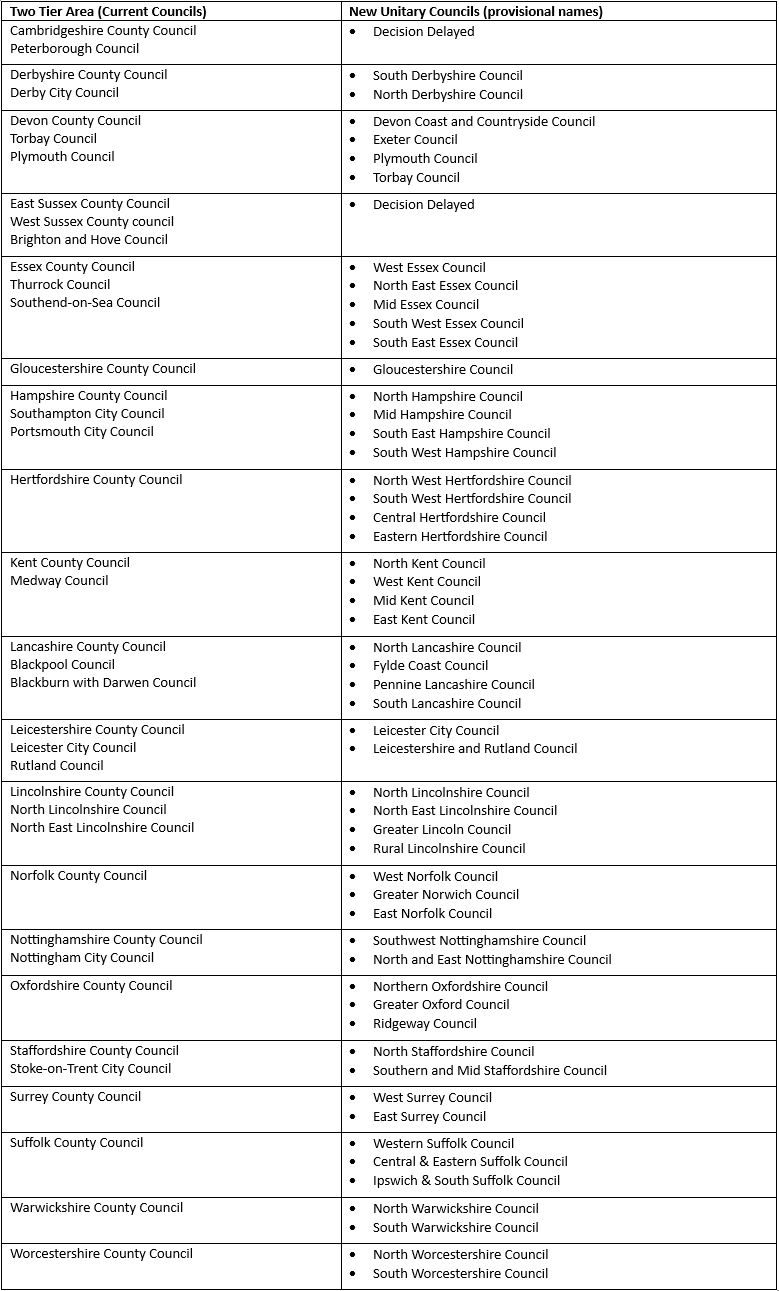
The table below shows the outcome of the process for all two-tier areas in England. In most areas, shadow authorities will be elected in May 2027, fully taking office on 1st April 2028.
Naming the new unitary councils
ABC’s concern now is to ensure that none of the new unitary councils repeats the mistake of 1974 and chooses a name which makes inappropriate use of a historic county name.
To be clear, ABC is not opposed to historic county names being used within a council’s name, but only if this makes sense geographically. For some of the new councils the use of a historic county name with appropriate qualification would provide the best description of the location and area of that council, e.g. North Staffordshire Council, East Kent Council, Northern Oxfordshire Council etc.
Other councils do not have areas which are sensibly described by reference to a single historic county. In such cases using a historic county name at all can be a contrivance best avoided. For example, ABC has no objection to the proposed name of the new Ridgeway Council which will cover parts of both Berkshire and Oxfordshire.
The process by which the new council names will be determined is potentially quite lengthy. In the 16th July announcements, the Government was not prescriptive about what the new councils would be named. The names in the table above are those put forward in the initial consultations from earlier in the year. They are being quoted by the Government, but being described as “provisional” names at present. The Government needs to decide on a name for each new council to put into the Statutory Instrument which will create the new council. At present it is not clear when and how it is going to decide on those names. In any case, once elected each new shadow authority will be able to change its name from that in the Statutory Instrument.
Nonetheless, given the number and size of the new unitary councils, there is actually little scope for the new councils to make inappropriate use of a historic county name. We can be fairly confident that any doing so will be an exception rather than, as in 1974, the rule.
However, there are some problem areas we need to aware of:
- Our friends in Middlesex Heritage are fighting an ongoing battle to see the current shadow West Surrey Council rename itself to West Surrey and South Middlesex Council. This shadow authority was elected in May 2026 and will take office in April 2027. There is huge support in the Spelthorne area to see ‘Middlesex’ as part of the council name.
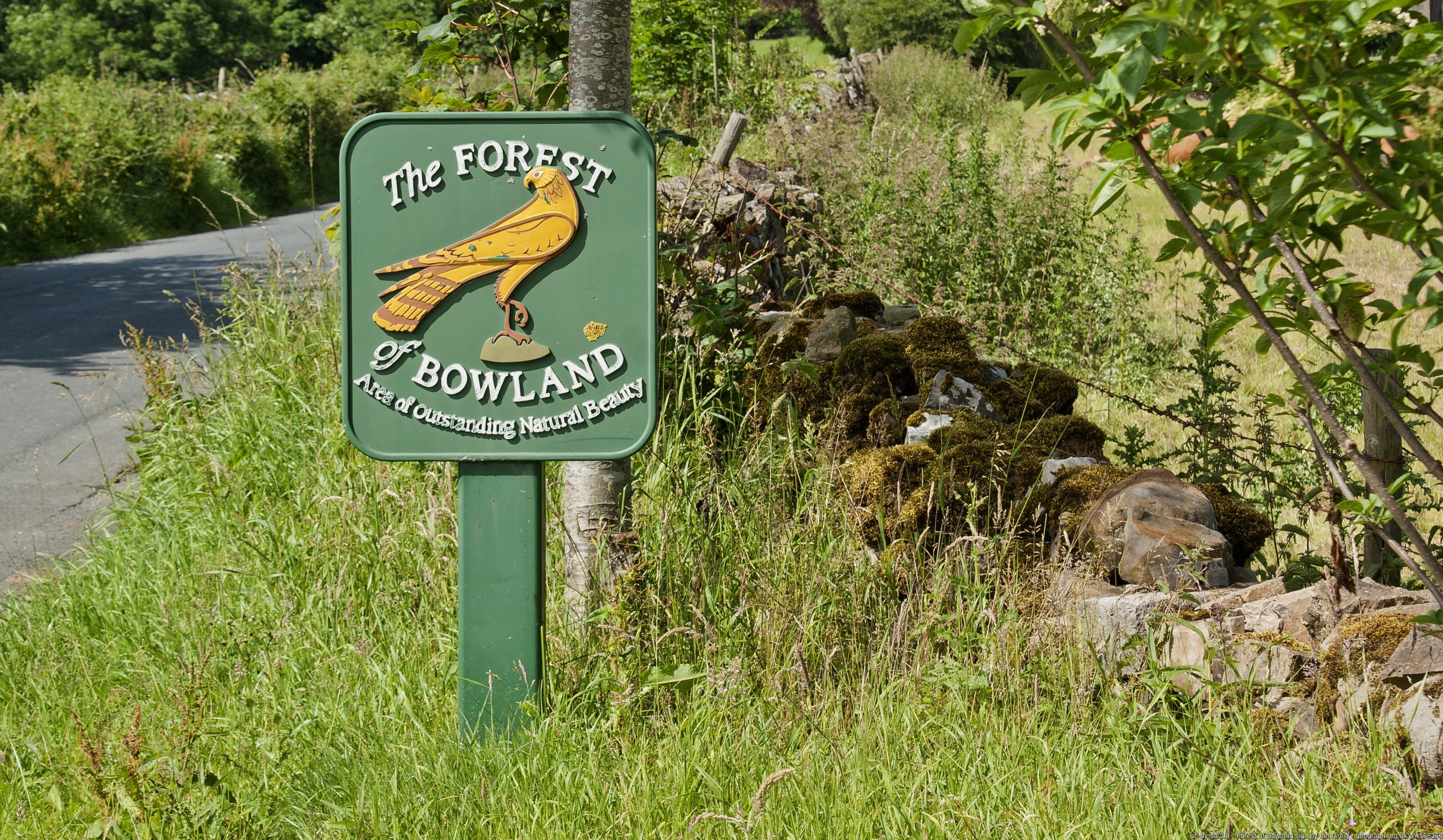
- The biggest source of controversy is likely to be around the names of the unitary councils replacing Lancashire County Council, primarily because two major areas of Yorkshire (Bowland and West Craven) have been in the Lancashire County Council area since 1974. It would be unconscionable for the names of the new councils to continue to portray these areas as being in Lancashire.
- The Government has actually yet to make a decision about the future form of local government in the current Cambridgeshire County Council area. This could yet produce proposals that apply the name Cambridgeshire to Huntingdonshire and the Soke of Peterborough area of Northamptonshire.
Below we take a more detailed look at the effect of the local government changes announced on 16th July in those parts of England which have suffered the most from “county confusion“ since 1974. In each case we compare the new councils to the historic counties to provide a sanity check on the new council names.
Lancashire County Council / Blackburn with Darwen Council / Blackpool Council
These councils are to be abolished and replaced with four new unitary councils. These are shown below, along with their provisional names, compared to the historic counties.
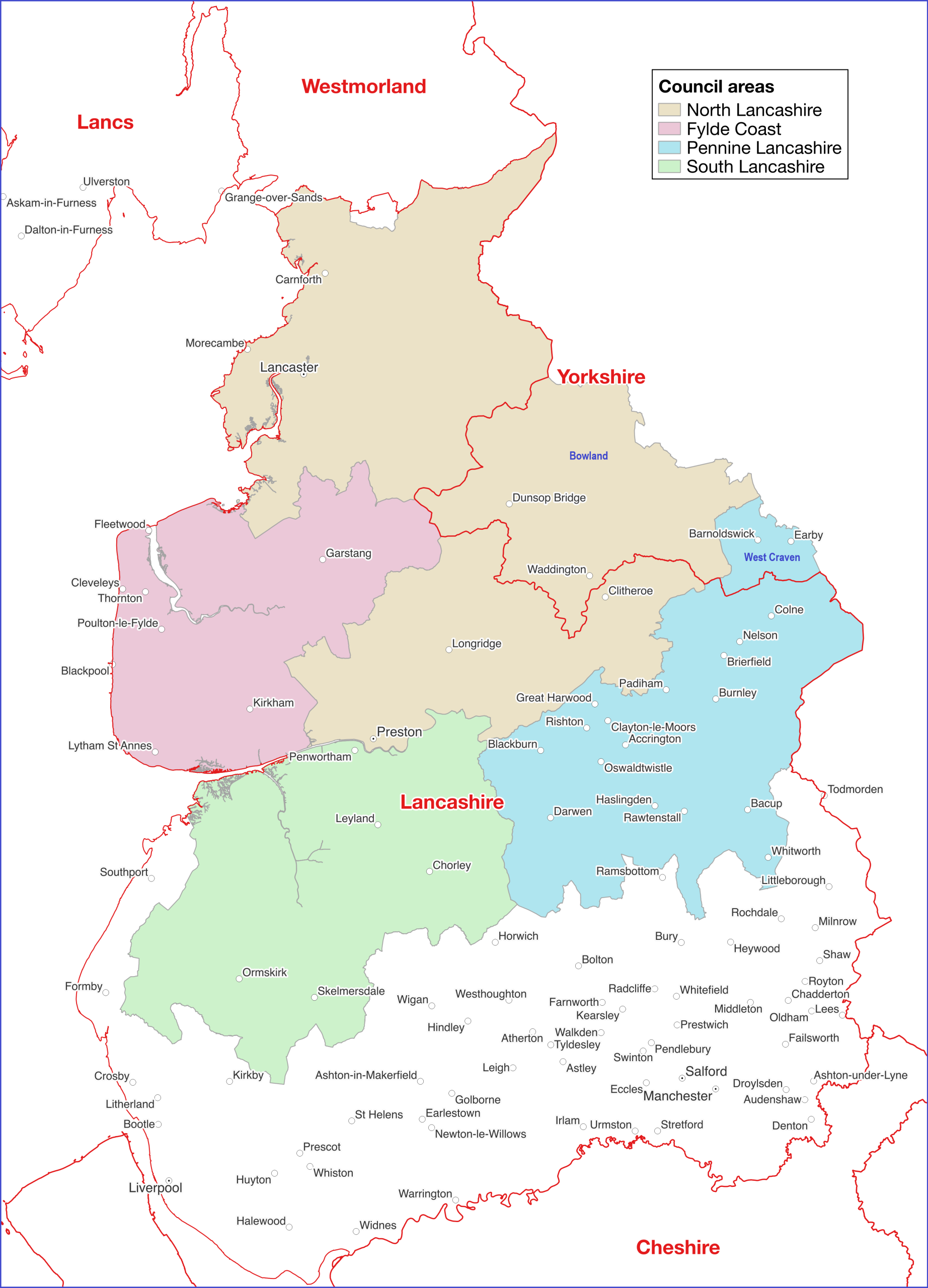
Lancashire County Council was one of the worst named of all of the 1974 local authorities. Despite its name, it excludes the whole urban south of Lancashire where most of the county’s people live. It also excludes the Furness and Cartmel peninsulas. It infamously includes the Forest of Bowland and West Craven areas of Yorkshire.
The names of each new unitary council must be chosen so as to properly reflect the location of the new council within Lancashire itself and, where relevant, to give proper respect to the Bowland and West Craven areas of Yorkshire. ABC has major objections to three of the provisional names:
- South Lancashire Council does not lie in the south of Lancashire and would be better named West Lancashire Council, Central Lancashire Council or even something like Heart of Lancashire Council;
- Around 110 square miles (22%) of the North Lancashire Council area comprises the Forest of Bowland area of Yorkshire. It would be better named North Lancashire and Bowland Council. Alternatively, a county-neutral name along the lines of Preston, Lancaster and Ribble Valley Council would highlight the civic identities of Preston and Lancaster but without portraying the whole of this area as being in Lancashire.
- The Pennine Lancashire Council area includes the West Craven area, with its population of 18,000 Yorkshire men and women. A better name would be East Lancashire and West Craven Council. Alternatively, South Pennines Council would be a county-neutral name which retains the association of the new council area with the Pennines.
Local pressure needs to be brought to bear in these areas to ensure that sensible council names are adopted.
Leicestershire County Council / Leicester City Council / Rutland Council
These councils will be replaced by two new unitary councils. These are shown below, along with their provisional names, compared to the historic counties.
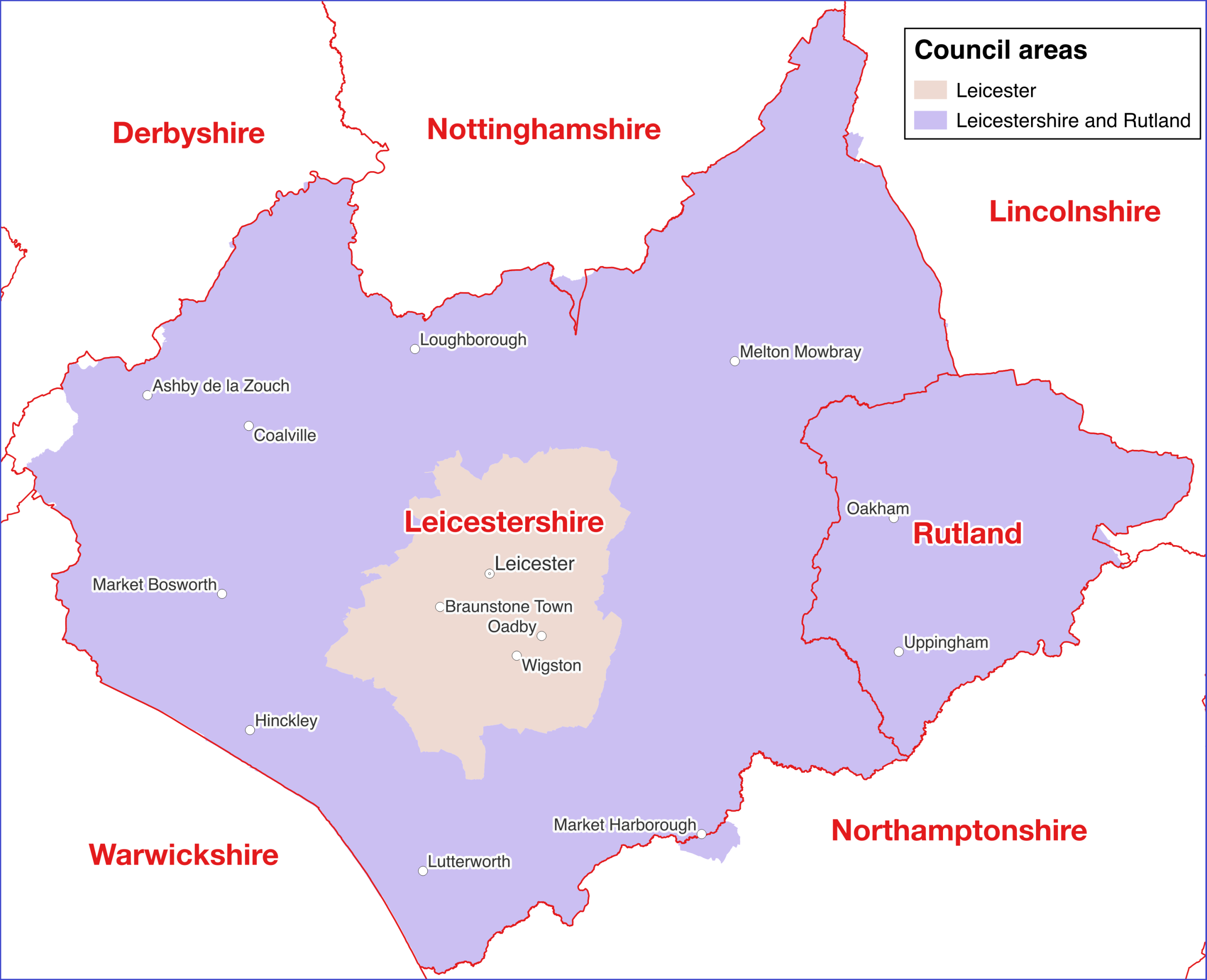
As set up in 1974, Leicestershire County Council was infamous in that its area also included Rutland. Rutland Council became a unitary council in 1997.
The current local government reorganisation sees an expanded unitary Leicester City Council with the rest of the Leicestershire County Council and Rutland Council areas becoming the basis for a new unitary council. ABC considers it essential that this later authority has ‘and Rutland‘ within its name. This does seem to be the intention.
Oxfordshire County Council / West Berkshire Council
These councils will be replaced by three new unitary councils. These are shown below, along with their provisional names, compared to the historic counties.
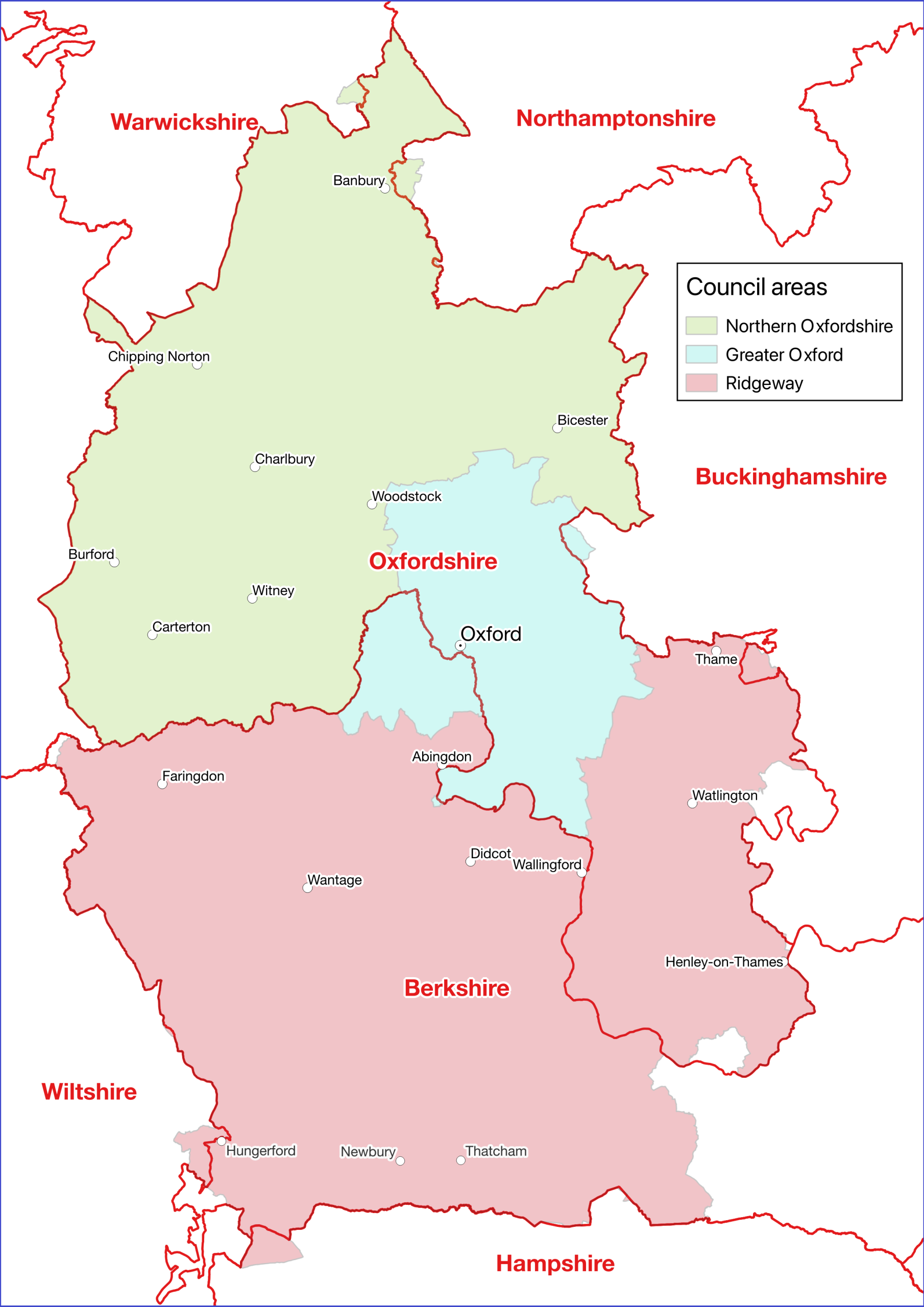
The current Oxfordshire County Council is infamous for having a wildly inappropriate name, its area including a huge area in the north-west of Berkshire. The new unitary set-up will bring this ridiculous situation to an end after 54 years.
Whilst two of the successor unitary councils do cover parts of both counties, the provisional names (Greater Oxford Council and Ridgeway Council) are sensibly neutral as far as the counties are concerned. The name Northern Oxfordshire Council is entirely reasonable for the third council.
Lincolnshire County Council / North Lincolnshire Council / North East Lincolnshire Council
Lincolnshire County Council and the district councils in its area will be replaced by two new unitary councils. These are shown below, along with their provisional names, compared to the historic counties. North Lincolnshire Council and North East Lincolnshire Council will continue.
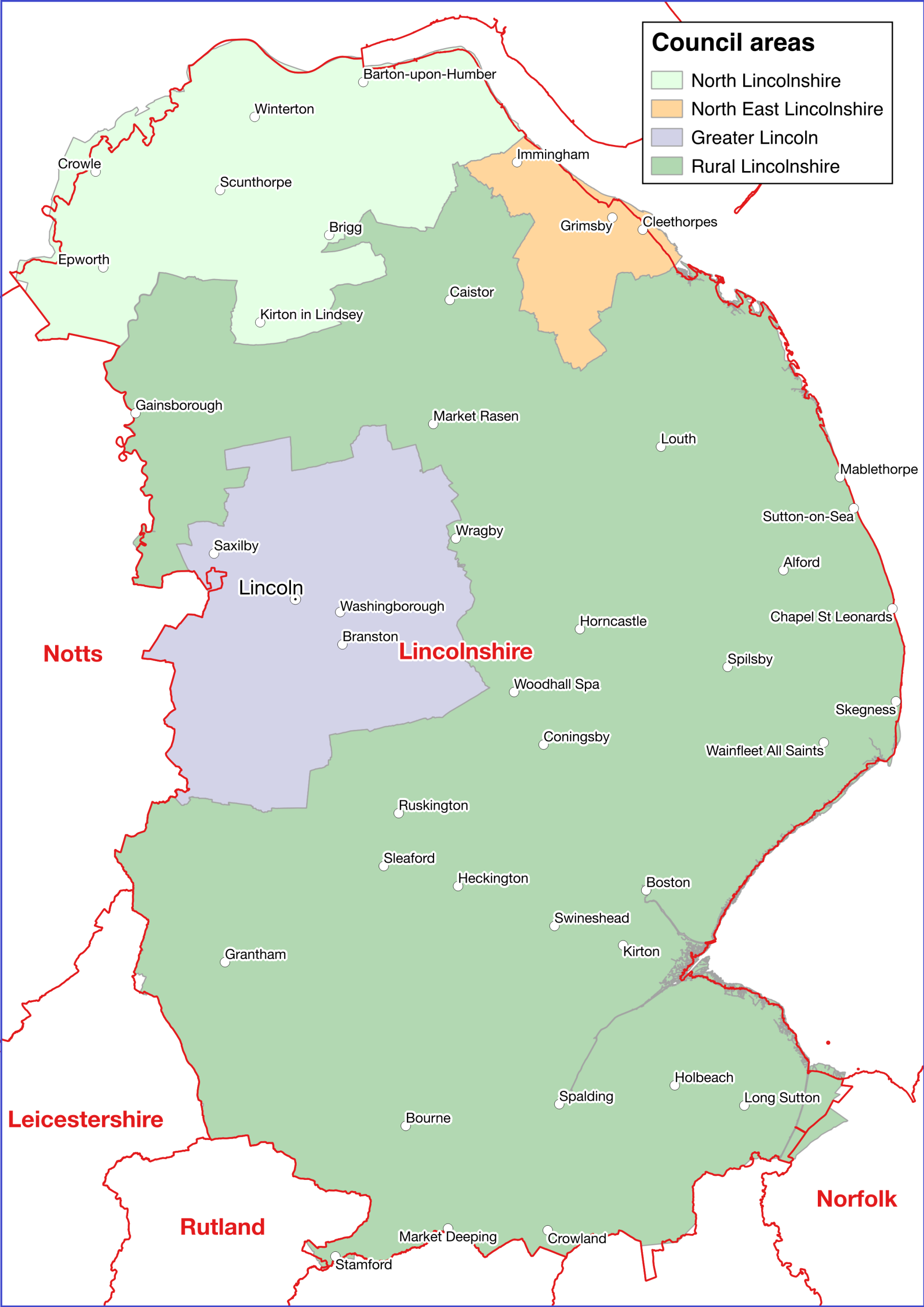
The current Lincolnshire County Council, as set up in 1974, has always excluded the northern part of the county. From 1974-1996 this area was under Humberside County Council and has since been under the two unitary councils North Lincolnshire Council and North East Lincolnshire Council.
The replacement of Lincolnshire County Council with two unitary councils presents an opportunity to find a less bizarre set of council names in this area. Unfortunately it is hard to see a council choosing to call itself Rural Lincolnshire Council, the provisional name. A better name than this needs to be found. Naming it just Lincolnshire Council should not be an option.
Warwickshire County Council
Warwickshire County Council and the district councils in its area will be replaced by two new unitary councils. These are shown below, along with their provisional names, compared to the historic counties.
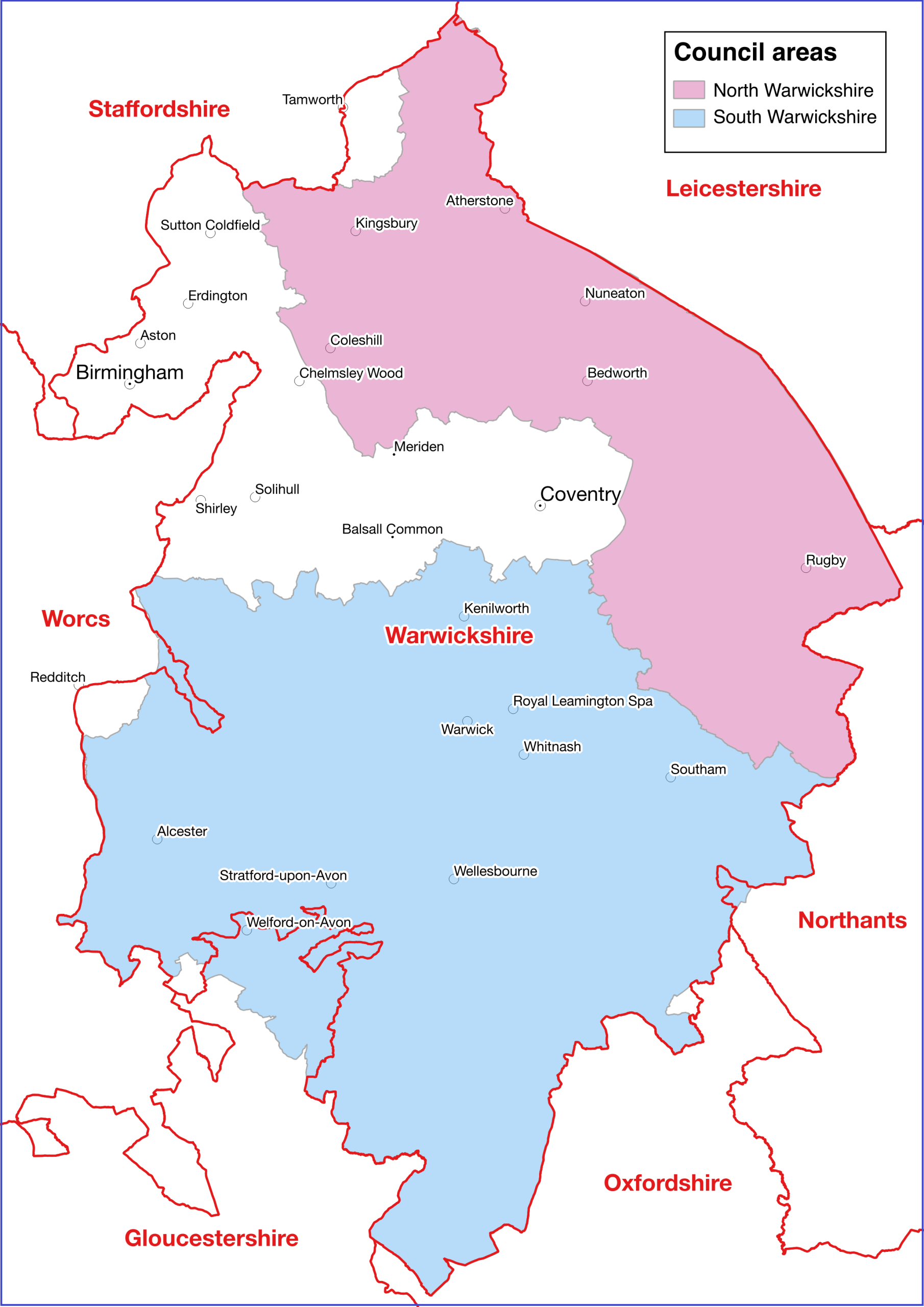
The current Warwickshire County Council, set up in 1974, has one of the most outrageous of all local government names. Its area excludes the entire populous north-west of the county, including Birmingham, Coventry, Solihull and Sutton Coldfield.
The splitting of this council area into two unitary councils and the overwhelming likelihood that these will be called North Warwickshire Council and South Warwickshire Council will finally resolve this issue. When viewed in relation to their place in the historic county as a whole, these names are reasonable.
Worcestershire County Council
Worcestershire County Council and the district councils in its area will be replaced by two new unitary councils. These are shown below, along with their provisional names, compared to the historic counties.
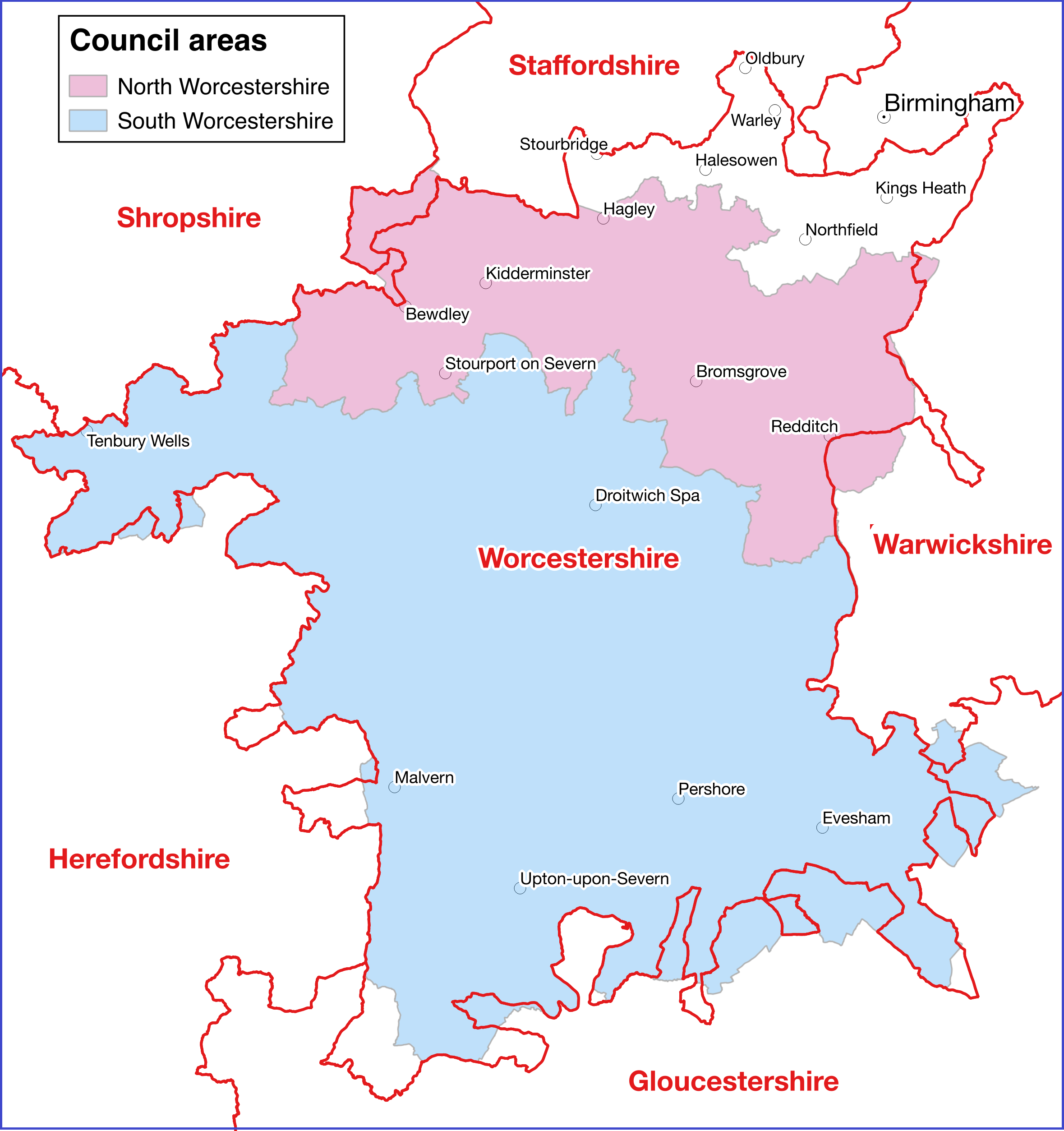
The current Worcestershire County Council was set up in 1998 after the abolition of Hereford and Worcester County Council, itself a creation of 1974. The council’s name is not ideal since its area excludes the populous north-east of the county.
The provisional unitary council names North Worcestershire Council and South Worcestershire Council are fairly reasonable for the areas they cover. Whilst North Worcestershire Council still doesn’t cover the populous north-east of the county, at least these council names are not literally claiming to cover / be the whole county.
Staffordshire County Council / Stoke-on-Trent City Council
These councils will be replaced by two new unitary councils. These are shown below, along with their provisional names, compared to the historic counties.
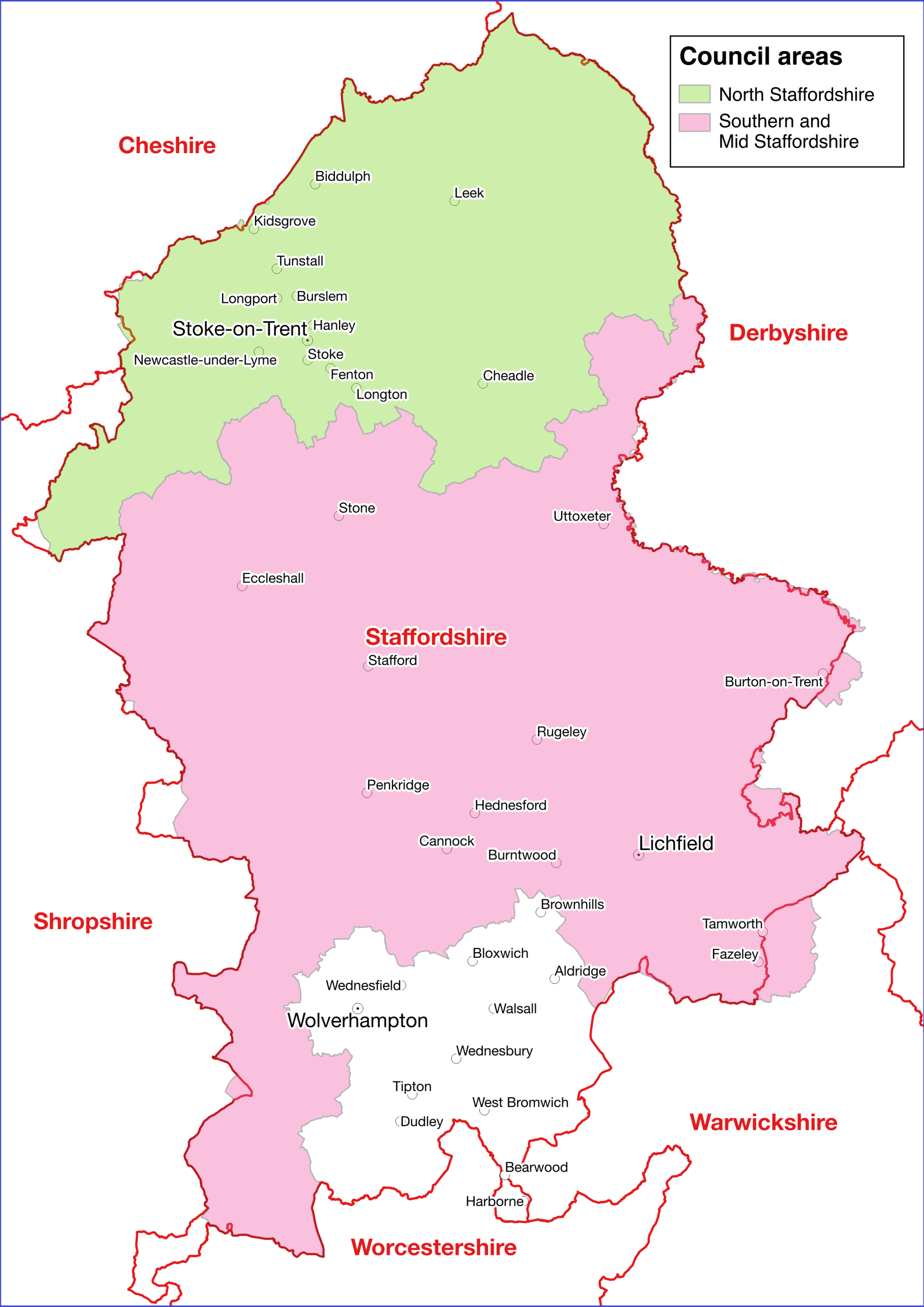
The name of Staffordshire County Council has, since 1974, been wholly inappropriate since this council area excludes the populous south-east of Staffordshire, including Wolverhampton, Walsall and West Bromwich.
The provisional new council names North Staffordshire Council and Southern and Mid Staffordshire Council are reasonable for the areas they cover, though the latter council would arguably be better called Mid Staffordshire Council.
Gloucestershire County Council
Gloucestershire County Council and the district councils in its area will be replaced by a single new unitary council covering the same area as the current county council. This is shown below compared to the historic counties. South Gloucestershire Council will continue.
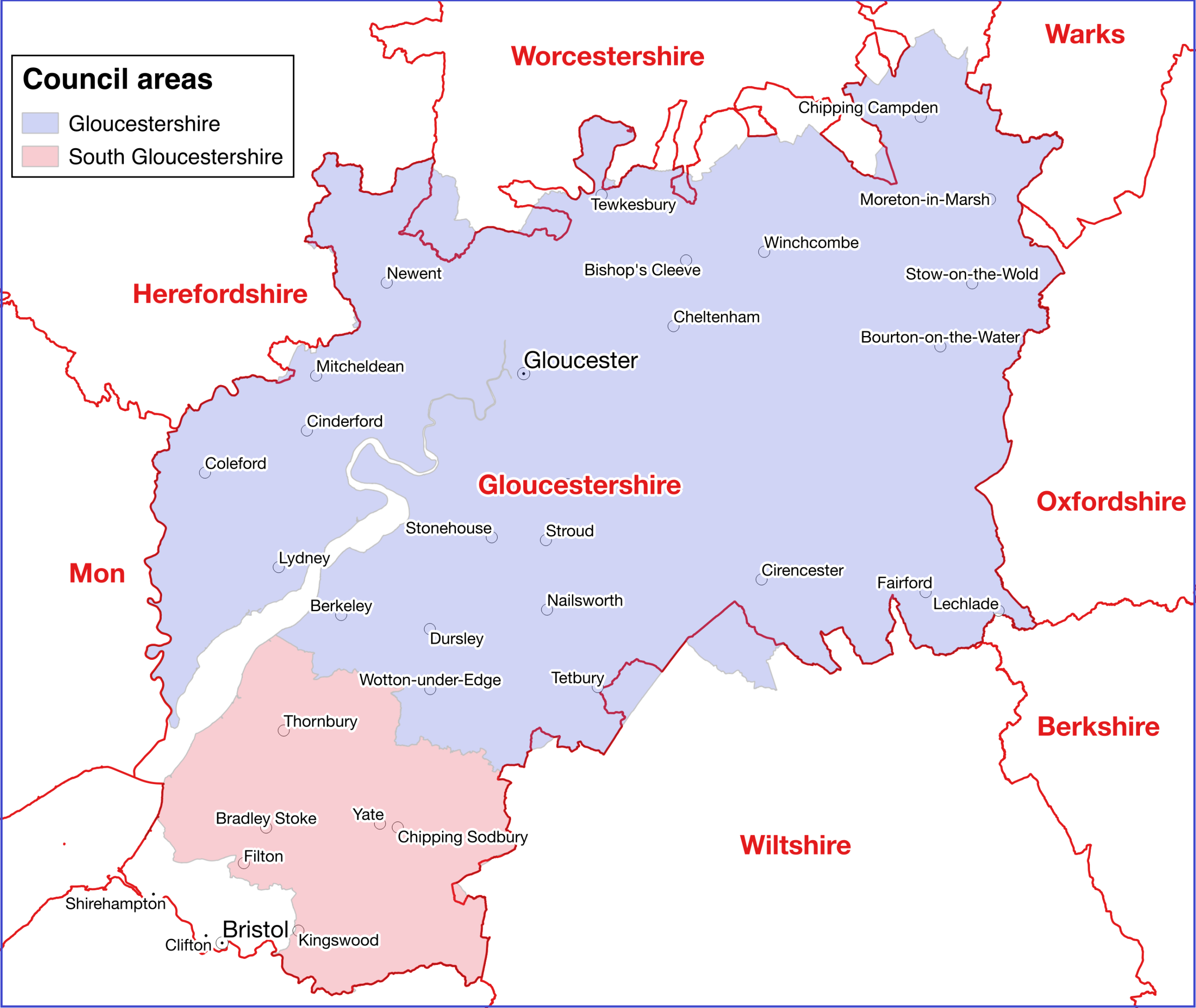
The current Gloucestershire County Council, as set up in 1974, has always excluded the southern part of the county. From 1974-1996 this area was under Avon County Council and has since been under the two unitary councils: South Gloucestershire Council and Bristol City Council.
This is the only instance in the ongoing reorganisation that a current county council area is being made the basis of a new unitary council. It seems highly likely that the new unitary council will end up being called Gloucestershire Council. The bizarre set-up of having a Gloucestershire Council and an adjacent South Gloucestershire Council could be avoided by calling the new council North and West Gloucestershire Council.
Hertfordshire County Council
Hertfordshire County Council and the district councils in its area will be replaced by four new unitary councils. These are shown below, along with their provisional names, compared to the historic counties.
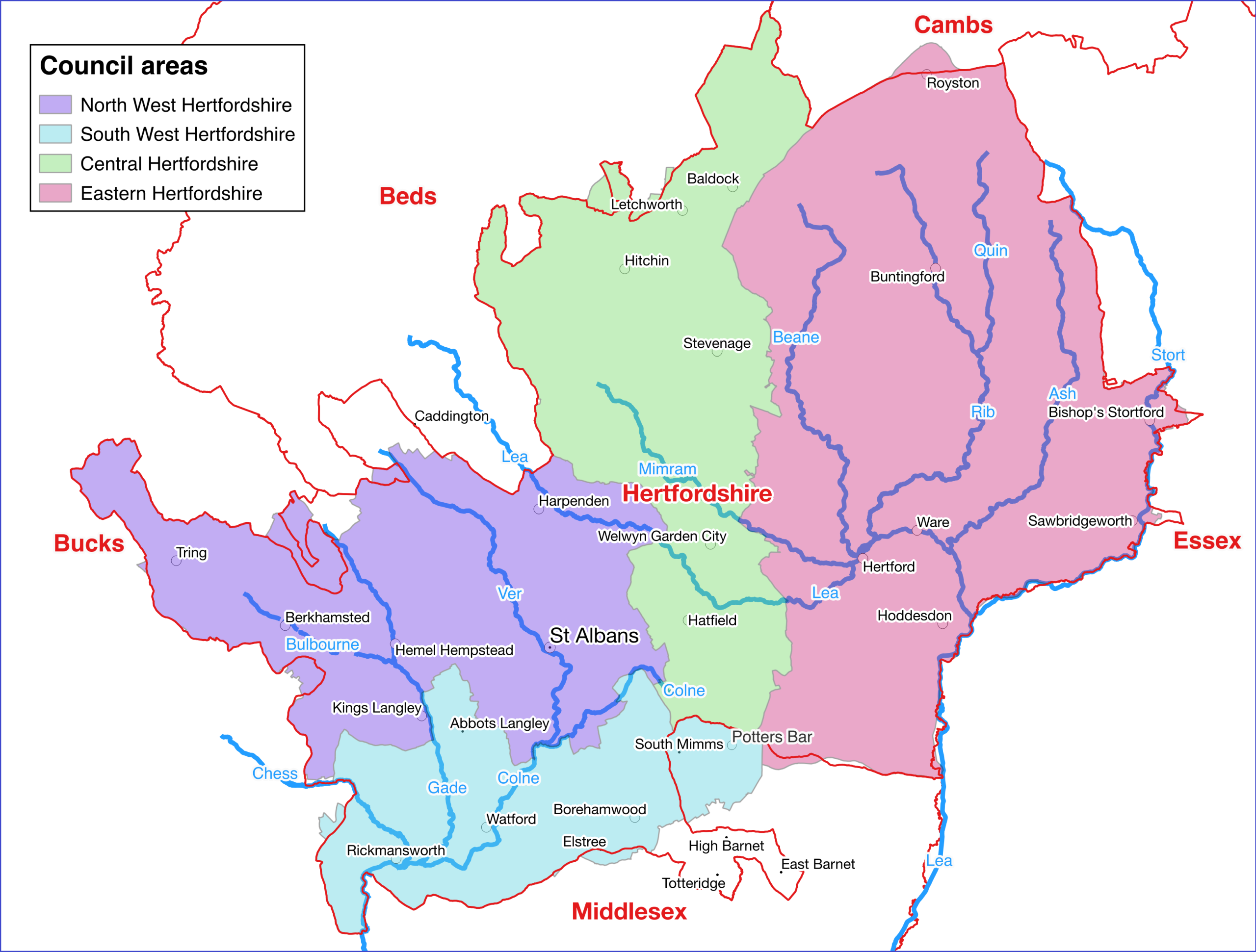
The current Hertfordshire County Council, as set up in 1974, has always excluded the High Barnet salient of the county. It also includes the area of the former Potters Bar Urban District Council. This area lies entirely in Middlesex and includes the town of Potters Bar, the village of South Mimms and the South Mimms motorway services.
A more appropriate name should be found for South West Hertfordshire Council, the new unitary council that includes the 24,000 Middlesex people of Potters Bar. Colne Valley Council would be an ideal county-neutral name. The River Colne rises at North Mimms, near Potters Bar, flows along the boundary of the eastern part of new council area and then down through the centre of the council area and on through Watford and Rickmansworth.
Kent County Council / Medway Council
These councils will be replaced by four unitary councils. These are shown below, along with their provisional names, compared to the historic counties.
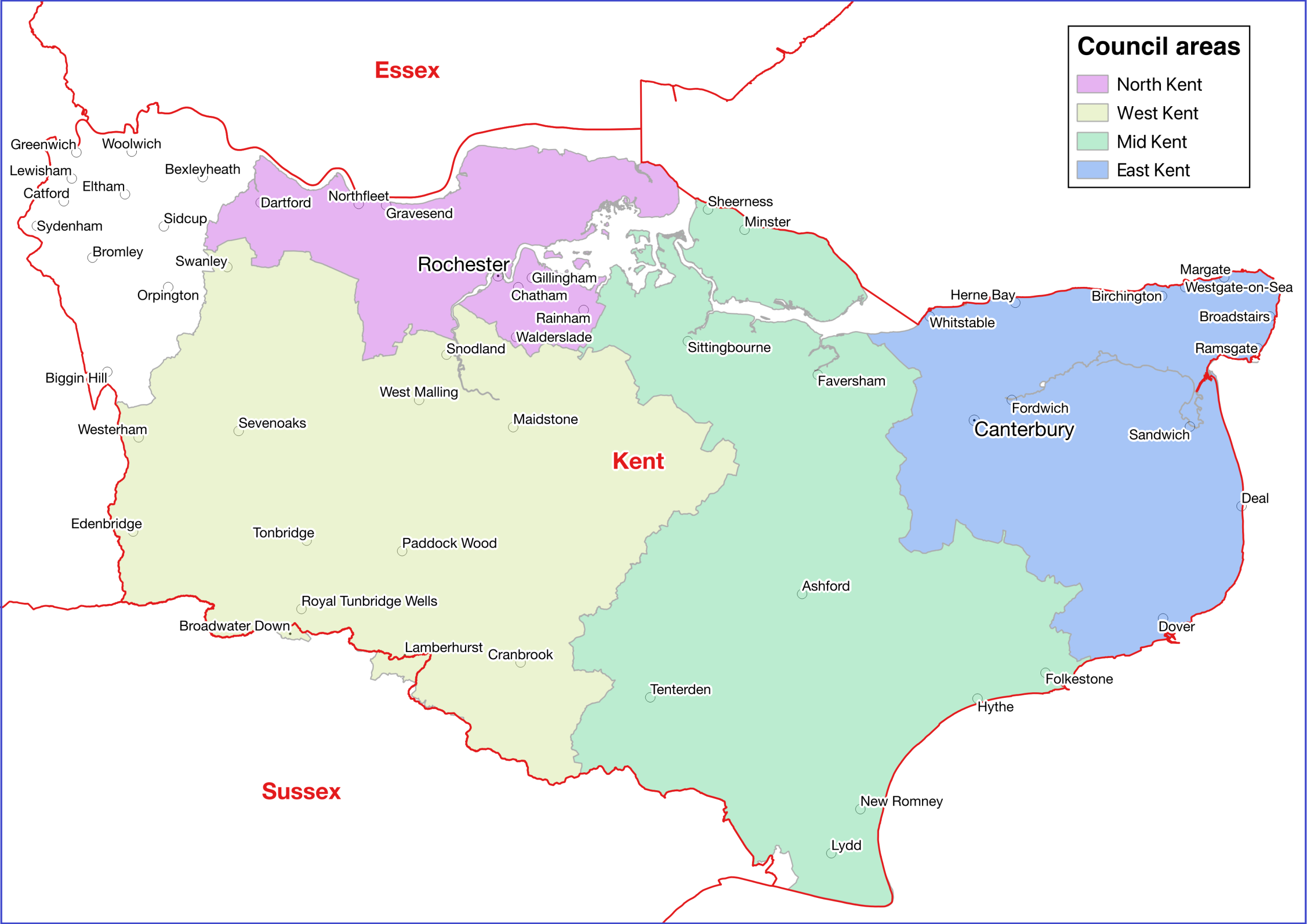
The main problem with the name of the 1974 Kent County Council has always been that its area excludes the highly populous part of the county in Greater London, including Bromley, Greenwich and Bexleyheath.
The creation of four unitary councils with compass-point names actually rather lessens the impression that the metropolitan part of Kent is not part of the historic county. Indeed, if one thinks of that area as Metropolitan Kent then it sits alongside the other council areas with no confusion at all.
Lieutenancy Areas
There is still the problem of the so-called “ceremonial counties”, that is the counties for the purposes of the Lieutenancies Act 1997. These were based on the newly created local government “counties” in 1974 and have remained largely based on them ever since – even as areas have been removed from county council control and made the basis of unitary councils. But the on-going large-scale local government reorganisation presents the Government with problems in relation to the lieutenancies.
Campaigners in Rutland believe that the Government has already promised to maintain Rutland’s “ceremonial status” once it has become part of a larger Leicestershire and Rutland Council. This suggests that the Government is going to create separate Leicestershire and Rutland lieutenancy areas within the Lieutenancies Act 1997. This would be a major change to the current approach of basing lieutenancies in England on current local government areas. At present, Stockton on Tees is the only council area to be split (along the River Tees) for lieutenancy purposes.
The abolition of local government Oxfordshire and the creation of Ridgeway Council and Greater Oxford Council also presents a problem to the Government. The current Oxfordshire and Berkshire lieutenancy areas reflect the 1974 local government areas of these names. The new unitary councils cut across the current local government boundaries. There has been no indication from Government as to how it plans to deal with this. Splitting these councils along the course of the Thames (cf. the Stockton-on-Tees approach) could be on the cards.
To ABC there is an obvious problem. Why should Rutland have its own lord-lieutenant but not Middlesex? Why not Huntingdonshire? Why not Glamorgan? Why not every historic county in Great Britain?
Continuing to base the lieutenancies on what will soon be former local government areas would be anachronistic and absurd. It is long since time that the lieutenancies throughout Great Britain were re-appointed to the historic counties. This move would fully end the last vestiges of “county confusion“. We will be repeating our call on the Government to undertake this simple and common-sense measure.
Concluding Remarks – Reclaiming the Counties
The end of the 1974 local government geography is a necessary condition for the real counties to resume their role as the standard geographical and cultural divisions of England. But it is not sufficient in and of itself. The Association of British Counties, the Historic Counties Trust and many other national and local organisations have much more work to do in promoting the existence and importance of the real counties. But the main obstacle to public and media understanding of our message is being removed and we can pursue our aims with renewed vigour and confidence.
The counties need to be on road-signs, on maps, in postal addresses, in geographical databases and major reference sources. Their histories and importance needs to be taught in schools. It is also time for the heritage sector (British Museum, National Trust, English Heritage, Historic England et al.) to acknowledge and promote this important part of our living heritage.
Note that whilst this article is primarily concerned with the situation with regard to the historic counties in England, there are, of course, still issues with the confusion of local government and the historic counties in Scotland and Wales.
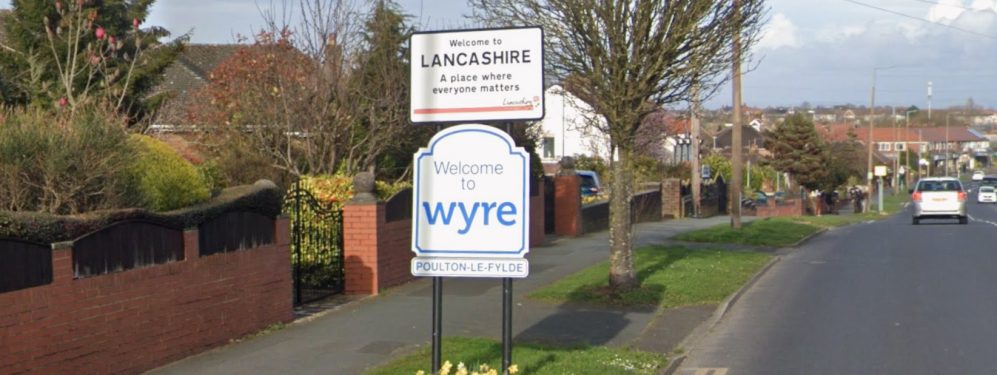
The banner photo of a “Welcome to Lancashire” sign as one leaves Blackpool is courtesy of Google Maps.
19 thoughts on “Reclaiming our counties: the end of “county councils””
I’m concerned about SW Essex Council. We in the Greater London part of historic Essex are SW Essex geographically, not Basildon & Thurrock so some other name should be devised for SW Essex council. Giving compass point names to the current ceremonial county of Essex and ignoring the historic county in the process is just replacing one form of county confusion with another.
This is a fair point. Fortunately, the other four councils replacing Essex CC have provisional names which are reasonable. South West Essex Council doesn’t really reflect the location and area of this council. Are the local politicians actually keen on this name? One wonders if they might not prefer “Basildon and Thurrock Council” for example. We are happy to suggest this or another alternative. The reality though is that local lobbying is really needed in matters of this kind.
I’m concerned about SW Essex Council. We in the Greater London part of historic Essex are SW Essex geographically, not Basildon & Thurrock so some other name should be devised for SW Essex council. Giving compass point names to the current ceremonial county of Essex and ignoring the historic county in the process is just replacing one form of county confusion with another.
I agree with most of the proposals mentioned in the article plus the “Basildon and Thurrock” suggestion. Some thoughts, though:
For Gloucestershire, the proposed new “Gloucestershire Council” does not include the westernmost point of Gloucestershire (Avonmouth) so I’m not sure “North and West Gloucestershire” is appropriate. I would suggest simply “North Gloucestershire”.
For Lincolnshire, “Mid and South Lincolnshire” would probably be the best name for the large council provisionally named “Rural Lincolnshire”.
In Nottinghamshire, I have seen news speculation that the new council provisionally named “North and East Nottinghamshire” might be called simply “Nottinghamshire”. That should of course not be considered a desirable option.
The suggestion of “North Lancashire and Bowland” in this article could probably be simplified to simply “Bowland” if a shorter name is desired- the Forest of Bowland straddles both sides of the historic Lancashire-Yorkshire boundary and reaches close to the edges of Lancaster and Preston, so it would suit the entire area reasonably well.
Thanks for your suggestions John. We’d have no problem with any of the names you suggest. The point you raise about a ‘Nottinghamshire Council’ is not something we’d heard. Let’s hope that doesn’t come to pass.
What about Durham county council it covers some parts of the north riding are they going to be made to drop the county council name?
Yes, this is tiresome. The other examples are Northumberland County Council and Rutland County Council (which is going). None of the other unitary councils created since 1991 which use a county name call themselves “county council” (e.g. Wiltshire Council, Shropshire Council etc.) so this isn’t a general problem. Aside from Gloucestershire County Council, none of the remaining county councils are being made the basis of a single unitary council, so we aren’t likely to see any more examples of this. The wider point, though, is that local government will provided by around 200 unitary councils only two of which call themselves “county council”. Compare this with the 45 “county councils” of 1974. Local government in general will not be seen as being comprised as “counties”. Whilst a small number of councils will still have inappropriate names, this will still be a huge step forward from our POV. There will also still be challenges with “ceremonial counties” and the names of some of the “Strategic Authorities”.
In a similar vein to Colin Newman’s post of 18 July at 12:37 PM, I also think that the proposed name Southern and Mid Staffordshire is inappropriate. Firstly, “Mid” would become before “Southern” if both were to be in a Council name. However, the key point (and one alluded to in the ABC article) is that having “Southern” in the title does not do justice to the areas in the south of the county which were stolen from the historic county of Staffordshire in 1974, being Aldridge, Brownhills, Dudley, Walsall, West Bromwich and Wolverhampton. Additionally, Cradley Heath, Rowley Regis, Smethwick and Wordsley were taken in 1966 and Arley and Upper Arley were removed in 1895. Thus, from this very important perspective, Mid Staffordshire Council would be a much more appropriate name and also nudges people to think about why there is not a South Staffordshire Council.
Mid Staffordshire would certainly be a better name. The Government is being quite clever here in not committing at this stage to what the new council names will be in the legislation. It is totally opaque as to when and how they are going to decide on this. This makes knowing who to lobby and how something of a challenge. All we really can do is express our views on certain of the “provisional names” to Government.
I really do think that the enabling legislation should include a provision that the new councils must erect double-sided signage on every road in their council area which crosses the border of a historic county to show passers-by (in either direction) which historic county they are entering. This will help re-establish local identity. Such a provision could allow a five-year timescale for councils to comply so as to spread the cost. I wonder if it would be possible for this legislation to be extended to the whole of Great Britain so that every historic country boundary is marked, not just those councils covered by the 2028 reorganisation.
A further provision could be included in legislation requiring Royal Mail to include the historic county name (appropriate to every postal address in the United Kingdom) in its database of addresses (covering every residential and business address). Post codes would not need to change. In time, this would mean the historic country names would roll out to all those organisations that use the Royal Mail address database for their own database of addresses for their contacts/customers. This would force commercial mailing houses to comply because some of them are the prime offenders of putting people’s addresses into the wrong county. As someone who lives in Rutland, I still get occasional letters addressed to Oakham, Leicestershire. Having the historic county name in the official postal address of each property will help to promote a sense of local identity to the whole population of the United Kingdom.
The road sign idea is obviously what we would like to see. We did manage to get the Traffic Signs Regulations and General Directions amended so as to enable highways authorities to erect signs showing historic county borders. This has enabled a fair number of such signs to be erected. But the regulations do not currently require erection of such signs. However, once the current county and district councils have been abolished there will be far fewer councils in England and hence far fewer council boundary signs. Also, since almost all of the councils which use a historic county name are to be abolished, there should be far less reason for the remaining councils to object to erecting historic county signs.
On the postal addressing side, there is much that could be done for sure. A major problem is the prevalence of drop down county lists in online forms that do not contain the really counties but lists of local government areas.
I am not sure how Lord Lieutenancies are funded, but I believe the post holders are not remunerated. However, I am sure that it would be possible for central government to reorganise all of the Lieutenancies so that they cover the historic counties of Great Britain and for local councils to be entirely excluded from any administration.
Yes, it wouldn’t be a straightforward thing to do. We’ve been suggesting it for the last 37 years. The Government doesn’t seem keen to do it unfortunately. What happens to the Leicestershire and Rutland lieutenancies will be interesting, as we discuss in the article. We are seeking clarity on this from the Government.
I expect the most likely lieutenancy borders to be altered are Berkshire/Oxfordshire given the creation of Ridgeway- in that case the simplest way of defining the lieutenancies would be “the portion of Ridgeway which is south of the River Thames is in Berkshire; the portion north of the Thames is in Oxfordshire”.
Yes, they could adopt the approach they did with Stockton-on-Tees. They will have to take some action (in the Lieutenancies Act 1997) in relation to the Leicestershire and Rutland lieutenancies. They can’t ignore the issue.
Perhaps the next thing is to get the names of police authorities and fire authorities changed to be something more appropriate. As someone who lives in Rutland it is quite objectionable to be policed by Leicestershire Police and to have fires put out by Leicestershire Fire and Rescue Service (albeit that we are grateful to the fire men and women based in Rutland). I have no problem at all with the name given to the East Midlands Ambulance Service.
The Home Office is currently undertaking a review to rationalise the number of police forces in England and Wales to 8-10 or so forces. This would presumably see the end of county names by police forces and a more regional based police force structure. That may or may not be a good thing from a policing POV, of course, but it would be another big step to ending county confusion.
I note the proposed name for the authority covering Rutland and Leicestershire is Leicestershire and Rutland Council but, perhaps a better name would be “Rutland and Rural Leicestershire Council” in recognition that Greater Leicester is not included in the council area.
Whilst this makes perfect sense, it’s hard to see any local authority deciding to call itself “Rural” anything. The same applies to the provisionally named “Rural Lincolnshire Council”. These names would be fine from our POV, but councils tend to choose names which they feel will help them promote their corporate image.