Good news: the unitary council replacing Lancaster, Preston and Ribble Valley district councils – which was provisionally named ‘North Lancashire Council‘ – now looks set to be called ‘Lancaster, Preston and Ribble Valley Council‘. After 54 years, the Bowland area of Yorkshire will cease to be part of a local government area which portrays it as being in Lancashire. Bad news: the West Craven area of Yorkshire could still find itself under a unitary council called ‘Pennine Lancashire Council‘. We discuss these and the other ongoing council naming issues.
As we recently reported in Reclaming our counties: the end of “county councils”, the abolition of the remaining “county councils” in England in April 2028 and their replacement by unitary councils will be a big step forward in separating the identity of local government from that of the historic counties:
- the new unitary councils will be called just “council” and not “county council”.
- few of the new councils will adopt names which challenge historic county identities.
The current reforms will see the abolition of 21 county councils and over 150 district councils. These will be replaced by around 60 new unitary councils. Only 8 or so of the new councils have provisional names which would, to a greater or lesser extent, perpetuate county confusion in their areas.
The Association of British Counties (ABC) is happy for historic county names to be used within a council name if this provides the best description of the location and area of that council, e.g. the new East Kent Council and North Oxfordshire Council. But where a council area cannot sensibly be described by reference to the historic counties, then a county-neutral name is better, e.g. the new Ridgeway Council.
The scenario which causes maximum county-confusion is where a council uses the name of one historic county but has an area which covers a large part of a totally different county, e.g. Oxfordshire County Council, Lancashire County Council and Cambridgeshire County Council. Fortunately, only 3 of the new unitary councils (‘North Lancashire’, ‘Pennine Lancashire’, ‘South West Hertfordshire’) have provisional names which fall into this red-alert category.
Ultimately each council will get the final say on its name, once the shadow authorities are elected in April 2027. Elected in April 2026, the shadow ‘West Surrey Council‘ – another red-alert case – has already voted to change its name to ‘West Surrey and South Middlesex Council‘.
‘North Lancashire Council’ or ‘Lancaster, Preston and Ribble Valley Council’ ?
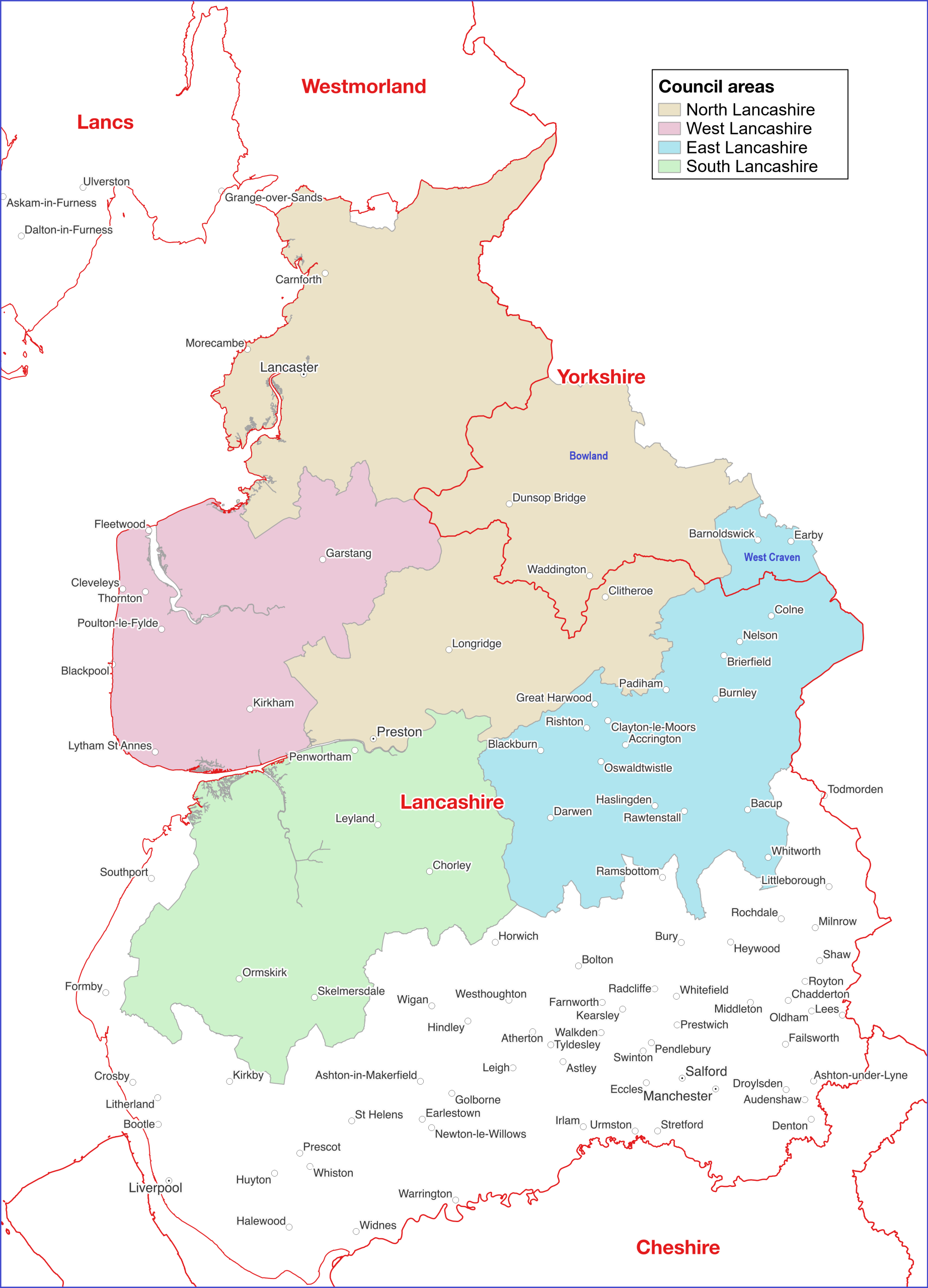
Lancashire County Council has an area which excludes the whole south of the county, as well as Lancashire North of the Sands. It includes the Forest of Bowland and West Craven areas of Yorkshire. The existence of this other ‘Lancashire‘ has been a major challenge to those of us who cherish the history, heritage and identity of the real Lancashire – and of Yorkshire too. The ongoing local government reorganisation is a golden opportunity to right this wrong.
As we reported in Yorkshire ignored as councils consult on names for new ‘Lancashire’ authorities, a new council area provisionally named ‘North Lancashire‘ is to be formed from a combination of the current districts of Preston, Lancaster and Ribble Valley. Around 110 sq miles of the new council’s area lies in Yorkshire, including most of the Forest of Bowland.
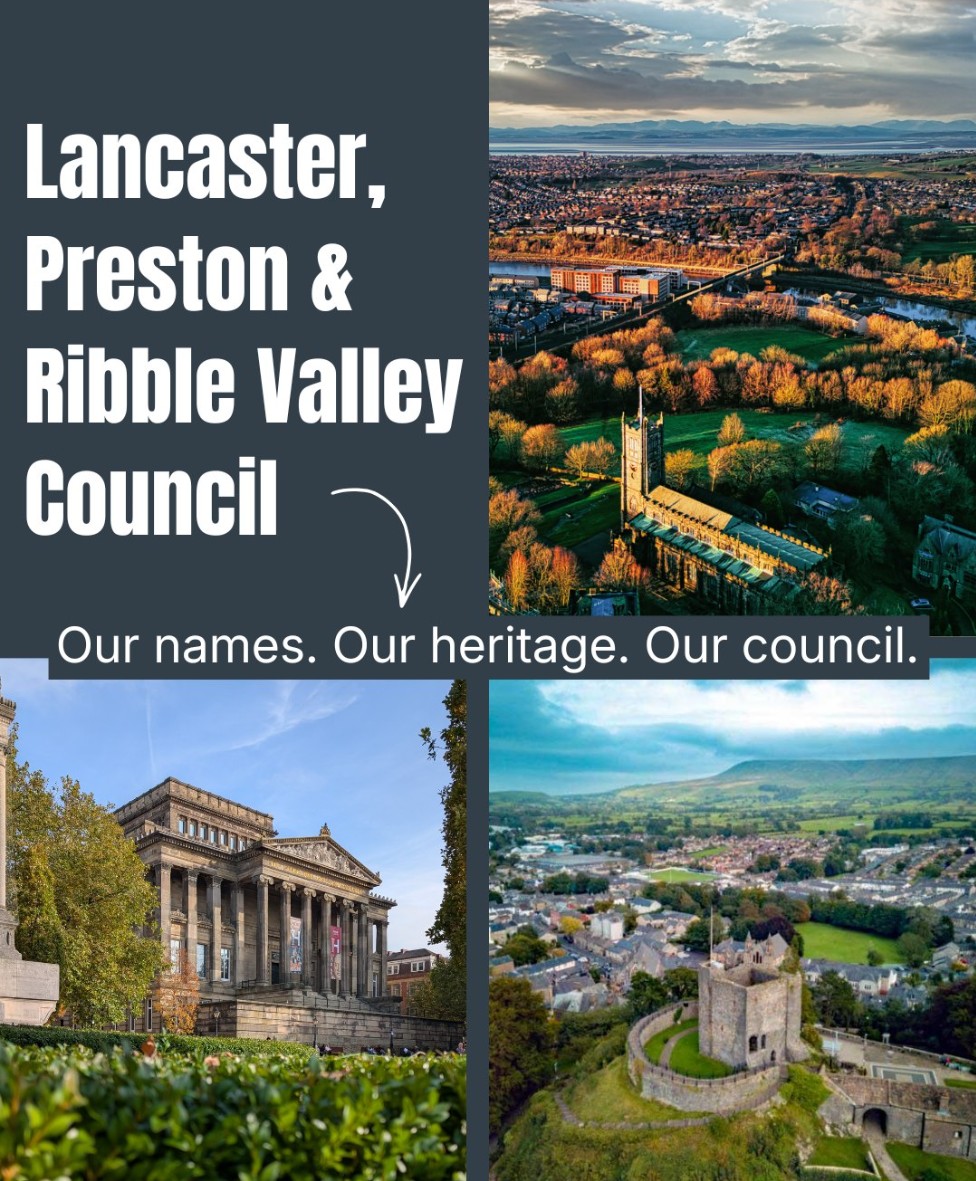
Fortunately, the name ‘North Lancashire‘ seems unlikely to be that finally adopted. A joint statement issued on 20th August by Lancaster City Council, Preston City Council and Ribble Valley Borough Council said they had: “achieved a consensus that an alternative name should be put forward for consideration which is Lancaster, Preston & Ribble Valley“.
The three council leaders have written to the Government to formally ask it to use ‘Lancaster, Preston and Ribble Valley Council‘ within the Structural Change Order which will form the legislation enabling the local government changes. The councils are also very actively promoting their preferred name.
The formal name change may not actually happen until the shadow council is elected in April 2027 since Lancashire County Council, tiresome to the end, is lobbying against this change. The Government has made this clear in its letter of 20th July to the chief executives of the current councils that the name of each of the new councils will be be down to that council itself once elected.
Given the unanimous support for the Lancaster, Preston and Ribble Valley Council name among local politicians, it seems fairly certain that this name will be that ultimately adopted by the new council. After 54 years of nonsense, Bowland will cease to be under a local authority which seeks to claim it as a part of Lancashire.
West Craven’s New ‘Pennine Lancashire‘ Nightmare
There is no such good news concerning the soon-to-be ‘Pennine Lancashire Council‘. This new council area is a combination of the current districts of Burnley, Hyndburn, Pendle and Rossendale along with the current unitary council of Blackburn with Darwen.
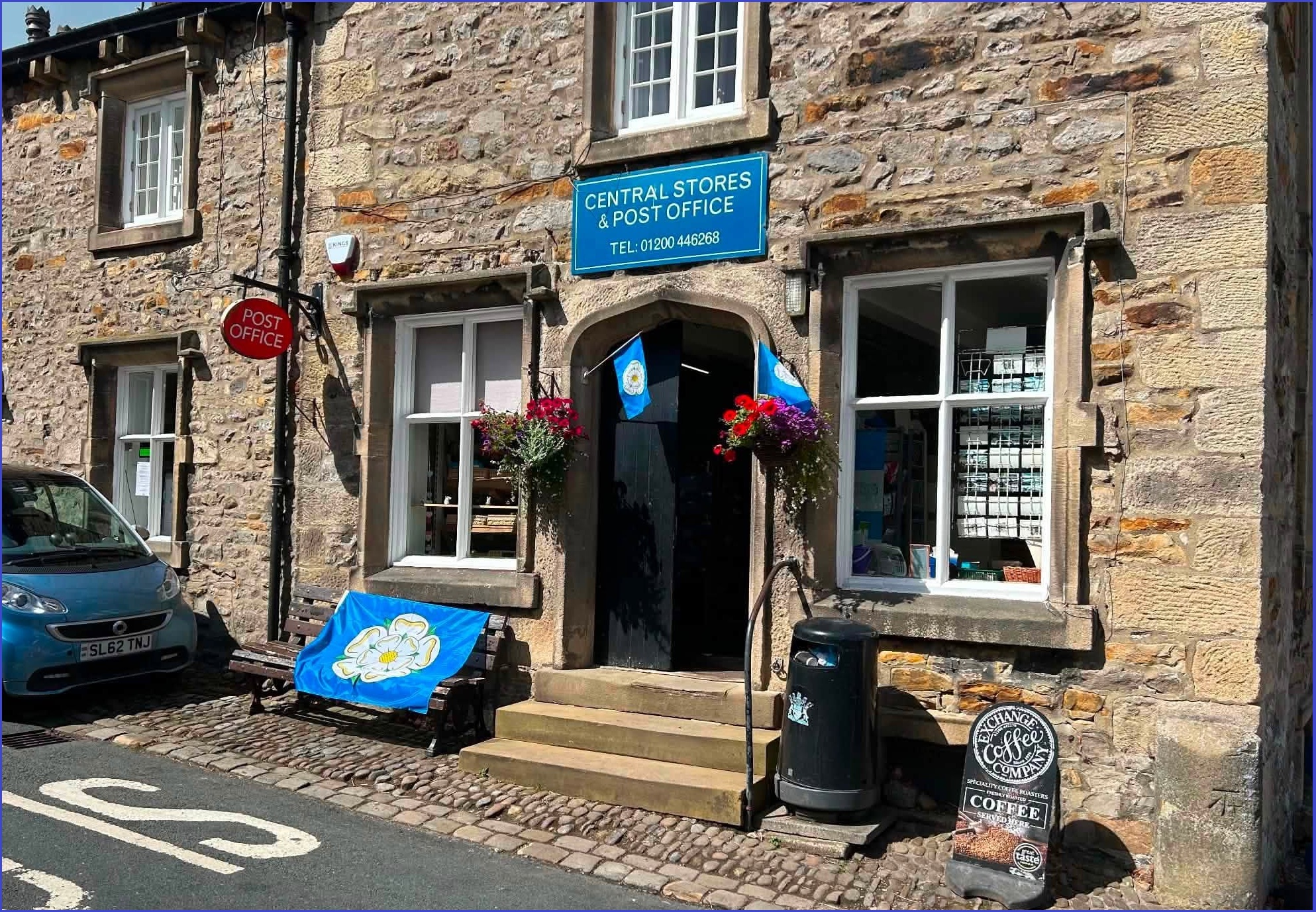
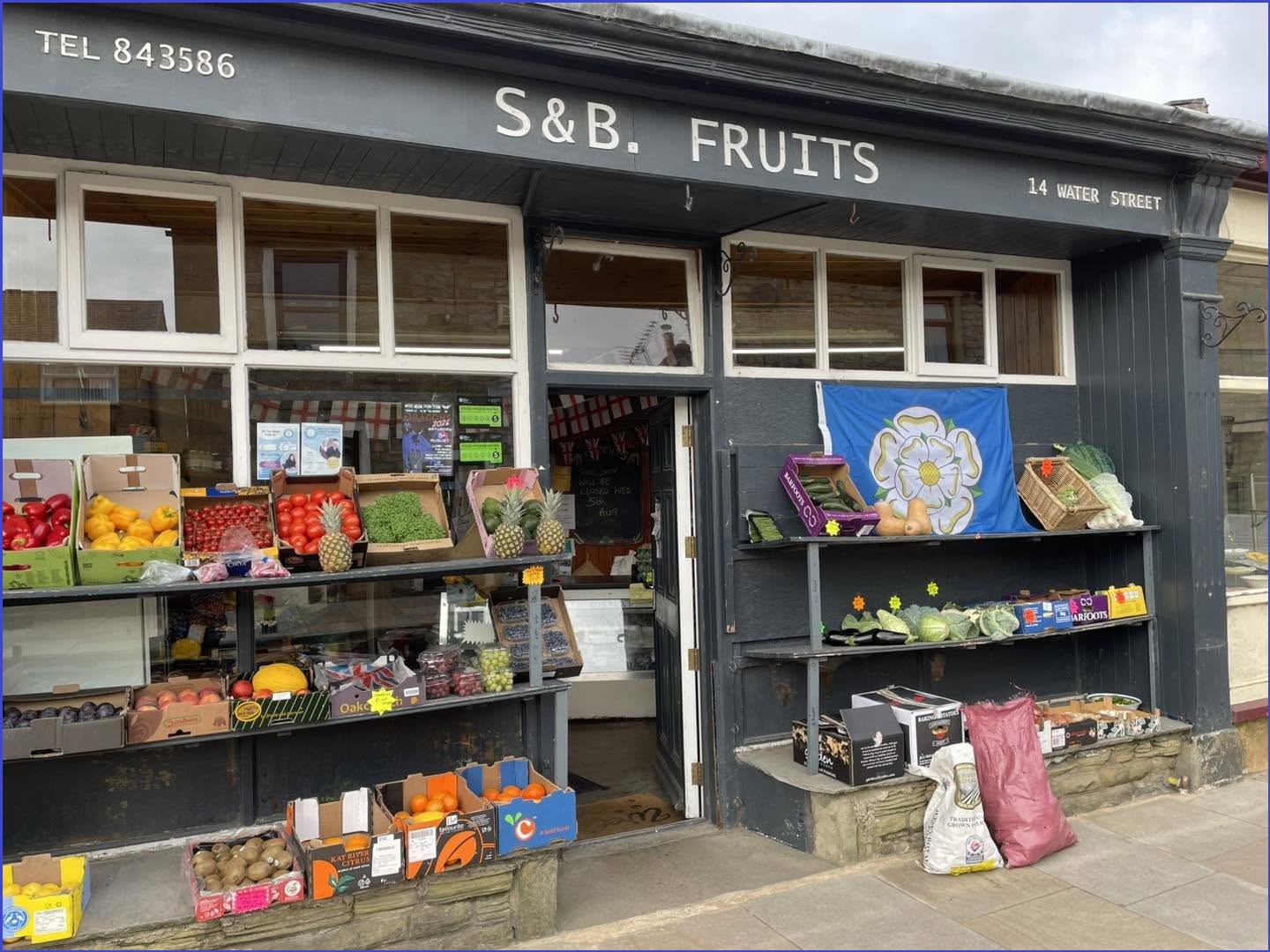
The West Craven area of the West Riding of Yorkshire was made part of Pendle Borough Council area in 1974, the area having previously being part of Skipton Rural District. The Yorkshire identity in the towns and villages of West Craven – Barnoldswick, Earby, Kelbrook, and Salterforth – remains strong.
Despite this the current councils are apparently quite happy with the name ‘Pennine Lancashire‘ and this seems set to be that used in the Structural Changes Order which will create the new authority.
Whilst the attraction of the name ‘Pennine Lancashire‘ to the larger part of this council area (that part actually in Lancashire) is understandable, to apply this name without any further qualification to West Craven would be utterly absurd.
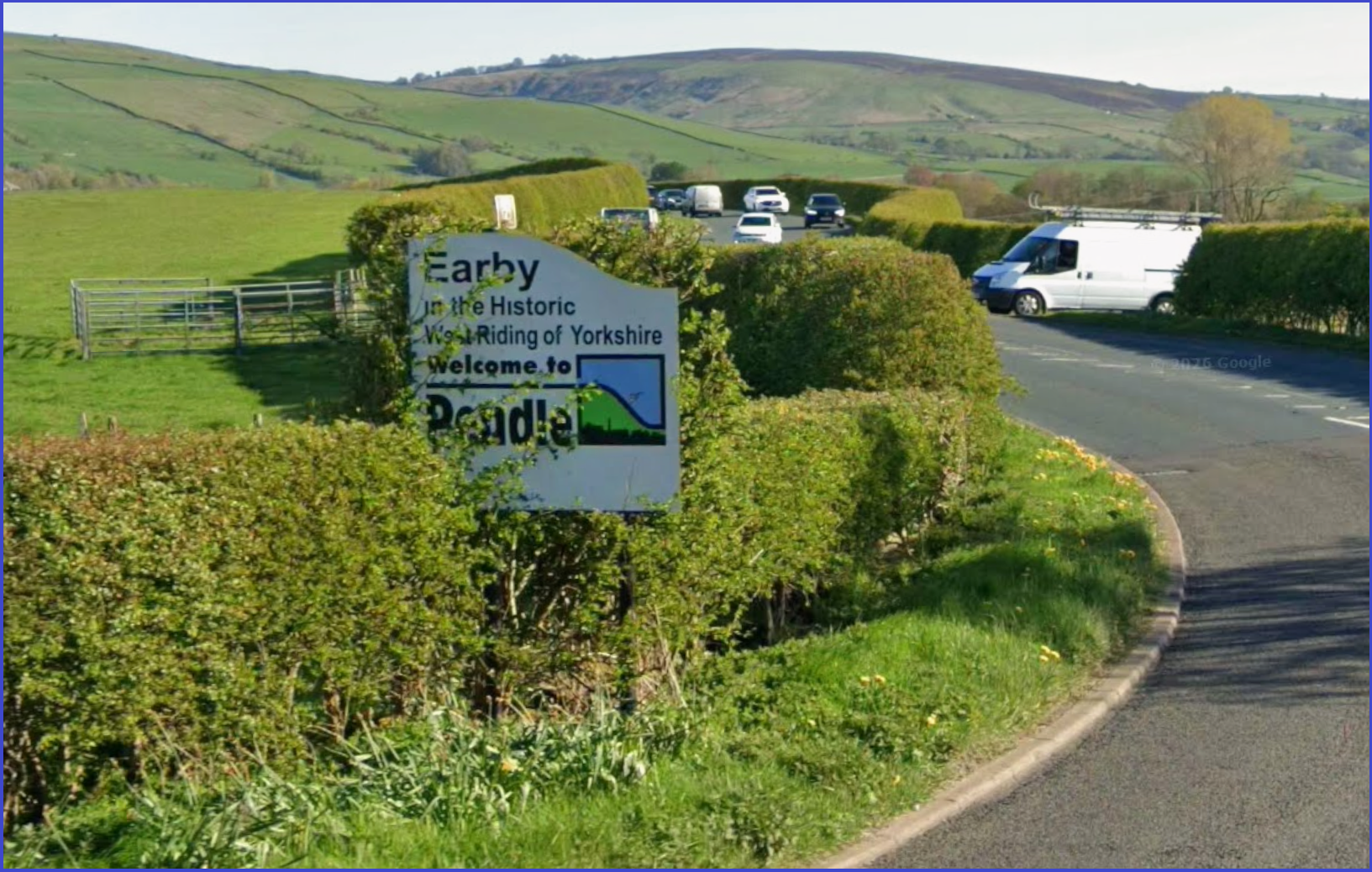
The current Lancashire County Council largely gave up signing this area as ‘Lancashire‘ many years ago. Pendle Borough Council has signed West Craven with a degree of sensitivity, with some signs reflecting the Yorkshire identity of the area. The local government changes could see the area signed in future as “Welcome to Pennine Lancashire“!
The 20th July letter from the Government to the council chief executives points to a solution to this problem: “It is also possible for councils to use a name other than their official name for branding and local identity purposes.”
This line has been included in the Government letter specifically to help councils deal with situations like that presented by West Craven.
The new council could adopt the formal name ‘Pennine Lancashire and West Craven Council‘, acknowledging the geographical and cultural reality that West Craven is not in Lancashire.
But, as the Government statement makes clear, the new council need not use its whole official name in all contexts. It could use the shorter “Pennine Lancashire” on boundary signs, schools, libraries etc. within that part of its area in Lancashire.
But the new council could give due prominence to the ‘West Craven‘ part of its official name on council facilities in West Craven. It could also design boundary signage which refers to the Yorkshire identity of West Craven (cf the Pendle Borough Council sign outside Earby).
There may be other creative ways to deal with this situation. But it cannot stand that West Craven is portrayed as part of “Pennine Lancashire“.
Other “sub-optimal” council names
We highlighted several other inappropriate names in our recent Reclaming our counties: the end of “county councils” article. Whilst it is hard to know exactly what the councils have fed back to the Government on the provisional names, it seems likely that most of these names will be those used in the Structural Change Orders. If so, then change will have to wait until the shadow councils are elected in April 2027.
South Lancashire Council: Another council name that mispresents the real Lancashire. This is not in any sense the ‘southern strip’ of Lancashire. ‘Central Lancashire Council‘ would be one of any number of better alternatives.
Devon Council: this unqualified name would be absurd for a council which will be just one council among four providing local government services across Devon. It had previously been referred to as ‘Devon Coast and Countryside Council‘, a name which still has the support of many local politicians. Hopefully it will end up with this or a different alternative name.
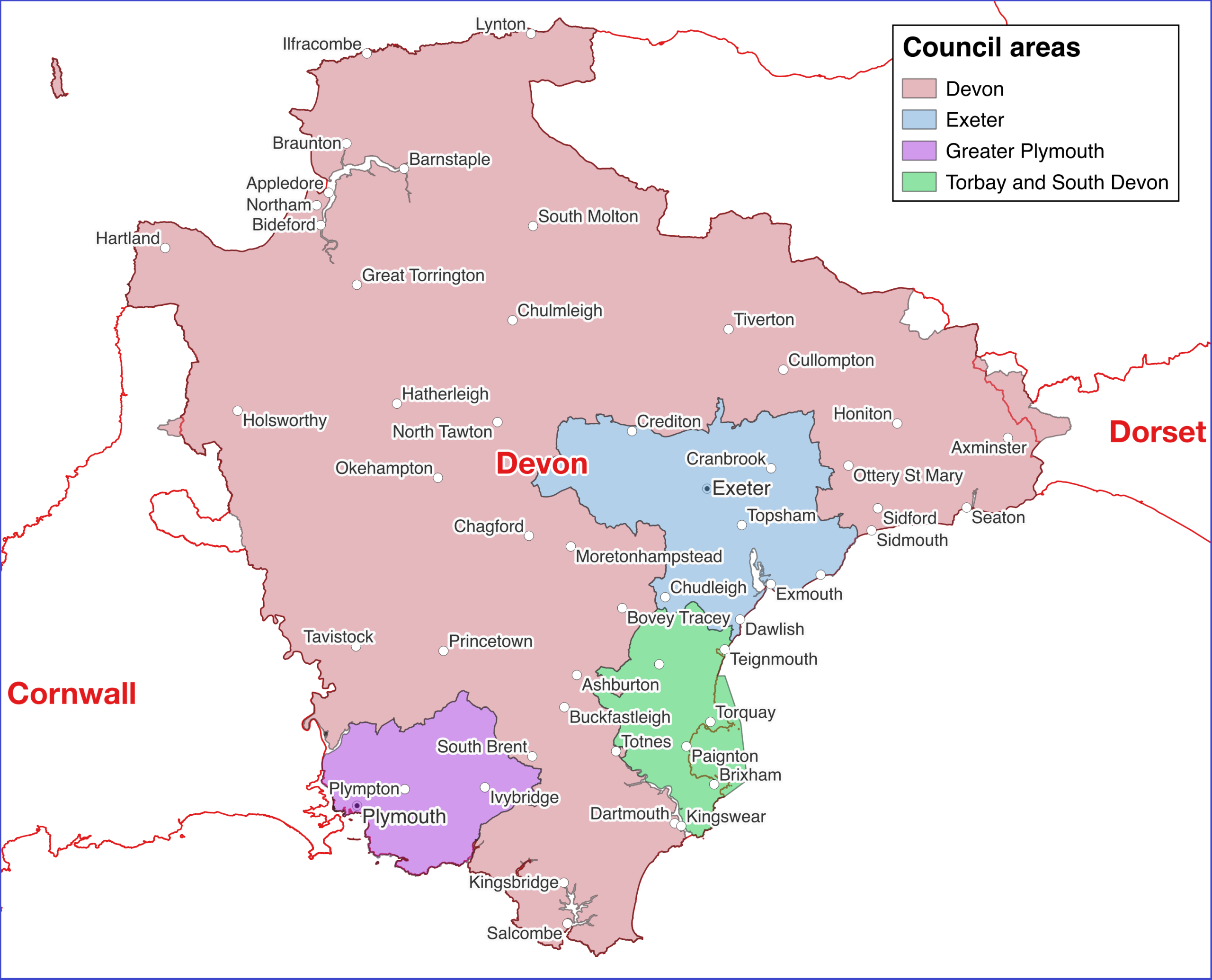
Lincolnshire Council: this will be one council among four providing local government services across Lincolnshire. This has become the provisional name because the current councils cannot agree on an alternative. Hopefully a better name will be adopted by the council itself.
Gloucestershire Council: This is the only instance in the ongoing reorganisation that a current county council area is being made the basis of a new unitary council. Despite the absurdity of the name, it looks like we are stuck with it.
South West Hertfordshire Council: We have discussed in some depth why this name would fail the Middlesex town of Potters Bar. We are advocating ‘Colne Valley Council‘ or ‘Watford and Colne Valley Council’.
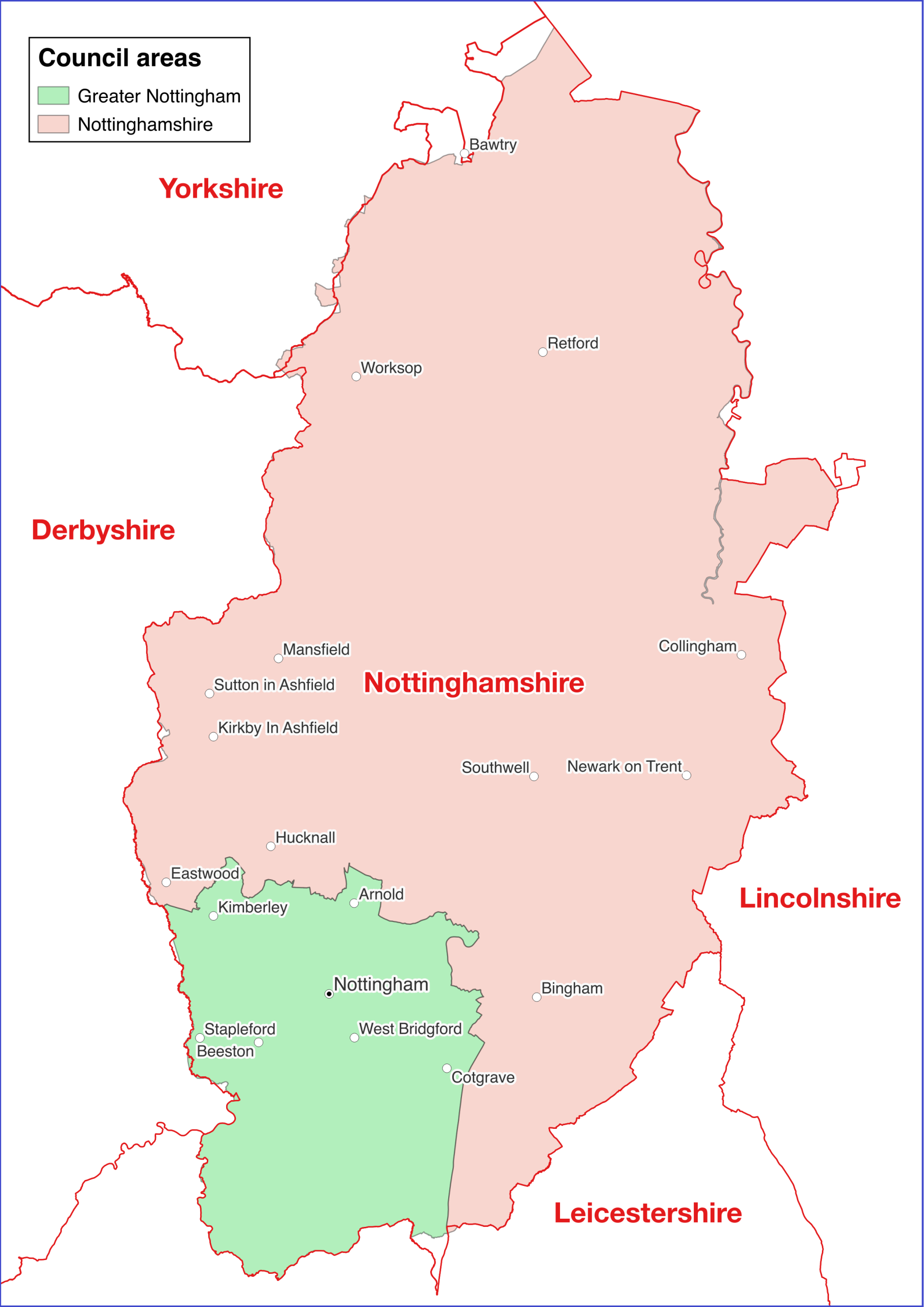
Nottinghamshire Council: until recently the two unitary councils replacing Nottinghamshire County Council and Nottingham City Council were being referred to as ‘Southwest Nottinghamshire’ and ‘North and East Nottinghamshire’. These are now being referred to as ‘Greater Nottingham Council’ and ‘Nottinghamshire Council’. We much prefer the earlier names.
There are a few other provisional council names where the geographical compass-point description doesn’t entirely make sense. The worst examples are ‘South West Essex Council‘ and ‘South West Hampshire Council‘, neither of which lies in the south-west of these counties. We suspect that both of these will be renamed by the shadow councils. It is certainly inconceivable that Southampton councillors will accept the city’s name not being at the start of the new council name.
On a positive note, Leicestershire and Rutland Council seems set to be the name for the unitary council covering Rutland and the parts of Leicestershire beyond the enlarged city council area. Clearly, this council doesn’t cover all of Leicestershire but the “and Rutland” makes clear its administrative nature and gives a reasonable sense of the area it covers, avoiding the 1974 horror show of portraying Rutland as a part of Leicestershire.
The Government has still not made up its mind about the council set-up to replace Cambridgeshire County Council and Peterborough City Council. More county-confusion could certainly result from the names and areas finally chosen here.
The Government is also yet to made up its mind about what will replace West Sussex County Council. The area will be split into two unitary councils though. It is hard to see how inappropriate county-based names could result.
Government back-peddling on Rutland lieutenancy?
ABC has long argued that the lieutenancies throughout Great Britain should be dissociated from local government altogether and the lord-lieutenants appointed directly to the historic counties (see The lieutenancies of England and their relationship to the historic counties), as a recognition of the important of both. Whilst the end of the 1974 local government system is an obvious time for such a move, the Government does not seem minded to agree.
Any changes to lieutenancy areas will be announced late in the day. The 20th July letter from the Government to the council chief executives states that the Government is first going to deal with the local government change in each area through a Structural Change Order and then, following that, will work with the current councils on “further legislation” concerning a range of issues including “ceremonial matters that need specific provision, such as Lord Lieutenants or Charter Trustees.”
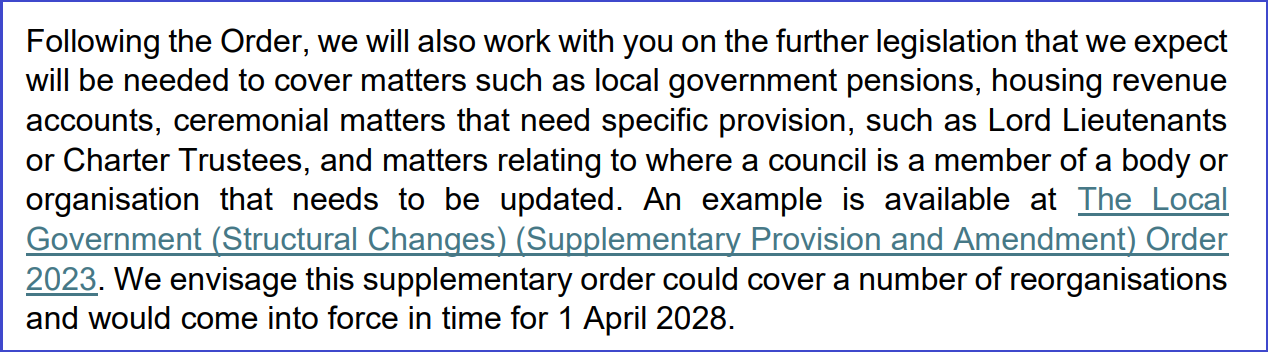
The Government clearly doesn’t want to change lieutenancy areas at all unless absolutely forced to by its own local government changes. It will most likely leave the lieutenancies based on the old 1974 “county council” areas, albeit that these will initially mostly continue as some kind of combination of unitary council areas.
This approach would see the lieutenancy areas become increasingly esoteric. Once the mayoral Strategic Authorities are fully established then the unitary councils will be seen as divisions of these and not as divisions of “ceremonial counties“. The lieutenancies of Wales are still based on the 1974 “counties“ but cannot be found on any road sign or map, invisible and irrelevant to the people of Wales. Such would be the fate of the lieutenancies of England. In contrast, re-appointing the lieutenants to the real counties would give the office prestige, relevance and affection.
The Government will have to make some kind of change to the lieutenancies in two areas of England:
- The abolition of local government ‘Oxfordshire‘ will require the Government to do something about the Oxfordshire and Berkshire lieutenancies. It could do the obvious thing and re-align them along the Thames. But don’t bet against it coming up with some other bizarre nonsense.
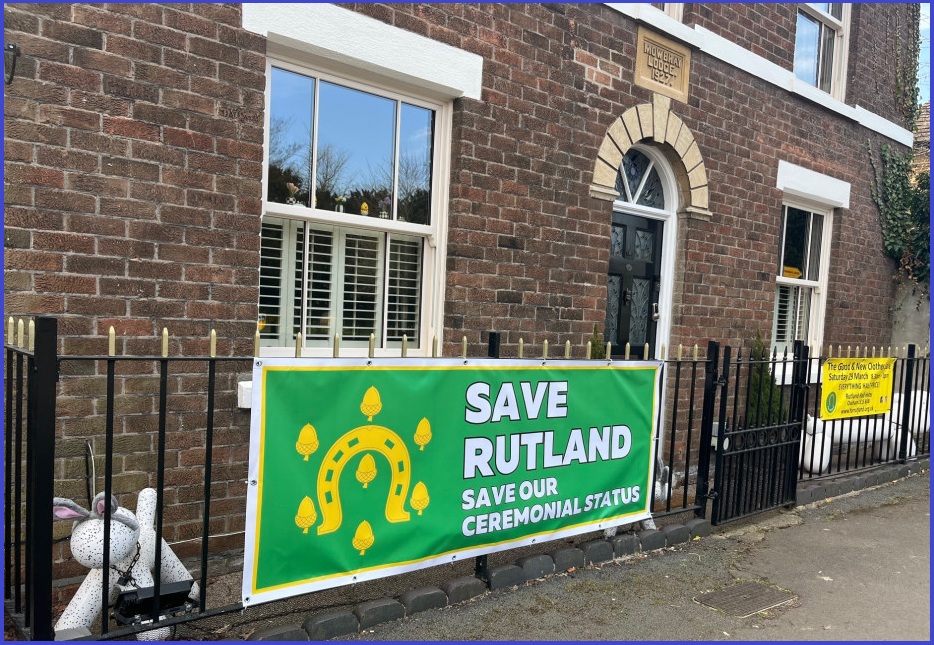
- The Government continues to dally over the issue of Rutland’s “ceremonial status” despite over 2 years of lobbying from Alicia Kearns MP and Rutland Council. On August 13th 2026, Rutland Council again resolved to raise this issue with the Government. But still their entreaties are met with the most weaselly of weasel words.
ABC recently asked the Government what its specific intentions are in relation to the Rutland, Leicestershire, Berkshire and Oxfordshire lieutenancies. The response from the Ministry Communities Housing and Local Government commits to absolutely nothing, concluding with:
“The Government remains committed to ensuring that ceremonial arrangements, including the role of the Lord Lieutenant, continue to be recognised and preserved as local government reorganisation is implemented.”
The Government’s evasiveness is not a good sign. We suspect it doesn’t want to go down the path of separating lieutenancies from combinations of council areas and instead basing them on real counties. It may be hoping that a single ‘Leicestershire and Rutland‘ lieutenancy will assuage the opposition. Though raising the issue with Prime Minister may have some effect.
Concluding Remarks
Despite the issues discussed above, the ongoing local government changes should be a big help to those of us who love our counties and spend our time promoting them. In general the notion of local government being provided by “county councils” within “counties” will be gone. Most councils will not have names that are especially challenging to traditional county identities.
There are, of course, other challenges to historic county identities.
- Many police areas remain based on 1974 “counties” and perpetuate these names. The Home Office is currently reviewing the police service with a view to creating a dozen or so regional forces in England and Wales. If seen through, this would surely see an end to Greater Manchester Police, Cleveland Police and so on.
- Some of the Strategic / Combined Authorities will also mis-use county names. Having a “Mayor of Lancashire” who doesn’t cover Manchester or Barrow but does cover Bowland is clearly going to be challenge. However, the scale of this problem across England is far from clear at present. At least these authorities won’t literally be described as “counties” or take on county identities. Combined authorities also tend to merge into larger combined authorities. The pattern of these authorities may evolve significantly over the next decade.
- It may actually turn out to be easier to get the Government to engage with the broader lieutenancies issue once the current local government changes are in place. The absurdity of having the lieutenancies based on former local government areas will be starkly obvious then and changes could be made with no threat of that causing confusion with ongoing local government change. If they do remain based on the 1974 “counties” then, shorn of councils, they won’t be anything like the threat to real county identities they once were.
Whatever the scale and nature of these future challenges, the onus is on those of us who love our counties to promote their existence and importance in any ways we can. The counties need to be on road-signs, on maps, in postal addresses, in geographical databases and major reference sources. Their histories and importance needs to be taught in schools. We need all our counties to enjoy county day celebrations on the scale currently seen in Yorkshire, Lancashire, Somerset and Sussex. We would be naïve to think the Government is going to take a leading role. It comes down to us.
5 thoughts on “Council Names Battle: Good News for Bowland, Bad News for West Craven”
A big shout-out to the councillors of the present Lancaster, Preston and Ribble Valley authorities: Well done for choosing such a wholesome and entirely appropriate name for the new unitary authority covering their area, namely “Lancaster, Preston and Ribble Valley Council.”
The joint statement of the council leaders for these areas (issued on 20th August 2026 and re-produced here in this ABC article) makes for compelling reading, as it lays out the case for the proposed new name, over and above the name “North Lancashire”. Writing about the latter, the Ribble Valley leader described this as seeming “nebulous and undefined”, also acknowledging the preferred alternative name as providing fairness of representation of the constituent partners, though stopping short of actually using the ‘Y-word’ (Yorkshire)!
The point made about the term “North Lancashire” being “nebulous and undefined” is quite a significant one, which sits comfortably alongside the argument about the obvious geographical inaccuracies, i.e. the complete omission of the fact (and travesty) that the Bowland area is in Yorkshire, along with the confusion of the Cartmel and Furness peninsulas also having claim to being geographically in North Lancashire.
It seems like common sense, along with fairness and respect for things like the appropriate representation of local heritage and civic pride, has prevailed in Lancaster, Preston and South Ribble. The chosen preferred name is one which unifies yet maintains and celebrates the individual characteristics of its people, and which provides a clear and recognisable identity to people further afield, including recognition by visitors, tourists, businesses, and the like.
Hopefully, this same “nebulous and undefined” consideration might eventually be taken on board by the councillors of the present Chorley, South Ribble and West Lancashire authorities (although in their case “undefined” might be replaced with “inaccurately and inappropriately defined”) with regard to the “South Lancashire” misnomer.
If they are not willing to accept the geographical inaccuracy (perhaps ‘gaslighted’ by years of Lancashire County Council ‘lies’), then hopefully they will be swayed by the prospect of the rest of the country, as well as people further afield, getting confused about “where-the-hell is that?”
I mean, come on, why would anybody want to pretend their towns and villages are somewhere else? Are they trying to free-ride off the heritage, identity and reputations of the towns and cities of industrial South Lancashire? (I’m talking about the REAL South Lancashire now, of course!).
Calling Chorley, South Ribble and West Lancashire “South Lancashire” is as much an afront to their own Central & West Lancashire history and identities, as it is to South Lancashire itself. Why don’t they go the whole hog and start adding ‘Manchester’, ‘Liverpool’, ‘Bolton’, ‘Wigan’ etc to the addresses within their council area? It’s absurd!
“Central Lancashire”, or even “Central and West Lancashire”, would surely be a much more appropriate alternative, that would preserve their own heritage and make geographical and historical sense, particularly to people elsewhere in the North West and in the country as a whole.
“Chorley, South Ribble and West Lancashire” might be less likely as a preferred name perhaps? Maybe too long? If long names were the order of the day, Greater Manchester might still have been called South East Lancashire, North East Cheshire (and even that ignored bits of Yorkshire! …and parts of South West Lancashire… or is that splitting hairs?).
I personally prefer “Central and West Lancashire” as it is arguably less “nebulous” than just “Central Lancashire”, which should probably also include Preston? The “West” Lancashire part would arguably still be correct, despite the current Sefton Metropolitan Borough and the whole of the Fylde Coast being geographically in the west of Lancashire.
But heh, that’s up to the people of Chorley, South Ribble and West Lancs. Let’s hope their elected representatives do them justice and credit by selecting a fitting and appropriate name.
As for “Pennine Lancashire”… my heart bleeds for the proud Yorkshire people of West Craven. How can people (i.e. the elected counsellors of the constituent authorities) who are (presumably mainly) proud Lancastrians, so blatantly, and with such apparent disregard, trample upon the heritage and identity of their brothers and sisters of the White Rose?
In my part of Lancashire, whilst we might engage in friendly banter and rivalry with our Yorkshire cousins (jokes about “God’s Country” and “The Dark Side” [of the Pennines] abound), we would treat their allegiance and their pride in their Yorkshire heritage with equal respect to our own Lancastrian identity and heritage.
ABC makes some interesting and perhaps hopeful points in this article about the potential naming of the East Lancashire and West Craven’ areas.
Let’s hope a satisfactory solution is arrived at, one way or another, and that common sense prevails all round.
Jed Bridge.
Salford, South Lancashire
As a Tyke I thank you for your succinct and thoughtful post.
All I can add is that hopefully the utterly malicious (imo) damage Heseltine and Co. did in the 1970s can be undone through tjme, effort and education. And that’s not a party political point, all parties have been terrible on this issue in general to date.
If Yorks and Lancs folk can stand together in redefining our respective historic borders back to what they were, then it’ll be great northern teamwork, rather than the quasi-combatitive rivalry that’s gone on (of course mostly in jest) over the years.
It’d be lovely to see the majority of Bowland back in the West Riding of Yorkshire, officially signposted and acknowledged. And for Lancashire to be able to reclaim its original coastal strip of what’s now Cumbria, which is also a truly breathtaking part of Britain.
Best wishes, Sjw.
Many thanks for your comments Jed. You make some important points about ‘South Lancashire Council’. This council name makes no sense at all. Only in local government circles would this area be considered the south of Lancashire. Ask a random sample of people from across the UK to name a town in ‘south Lancashire’ and the answers will be Wigan, St Helens, Bolton etc. It doesn’t look like any change can be made to this name or ‘Pennine Lancashire’ until the shadow councils are elected in May 2027 now. Though the sooner we start lobbying local politicians the better.
Thank you ABC and Sjw for your thoughtful replies to my first comment.
I agree with you about Yorkshire and Lancashire folk putting our rivalries to one side and uniting to defend and restore our true county boundaries, albeit that these rivalries are mainly tongue-in-cheek and friendly in nature.
Although, looking in from the outside at the apparent dismissive attitudes towards West Craven, represented in the proposal for the naming of “Pennine Lancashire”, one has to wonder whether this ‘rivalry’ might still have a foot trapped way back in the “Wars of the Roses”, accompanied by a desire to “keep these damned Yorkies in their place!” (apologies to my White Rose cousins for my use of poetic licence to illustrate this point).
My observation is not entirely one of mere cynicism and exasperation… I read some of the comments and replies to an online article by the BBC on the day of the announcement in July of the government’s decision to opt for the four-authority solution, along with corresponding ‘names’…
I was quite shocked at the seemingly unyielding public determination in some (hopefully not too widespread) quarters for the name “East Lancashire” and nothing else, with some hostility to the suggestion of the addition of “…and West Craven” – the latter being represented by ‘thumbs down’ symbols, as well as a couple of comments cloaked in humour… or was I being over-sensitive?
I mentioned ‘gaslighting’ in my first comment on this page. Gaslighting is a term commonly referred to in certain emotional abuse situations, whereby a perpetrator repeatedly manipulates and undermines a victim into believing that they are wrong, over-reacting, over-sensitive, unable to trust their own judgement, etc. The term originates from a 1930s stage play (and subsequent film) entitled “Gas Light”, where a husband psychologically manipulates his wife into believing she is losing her sanity,, as he insists she is imagining it when she reports seeing the gas-powered lights dimming (at the same time as he is secretly searching the attic, where his use of the gas light there is reducing the gas pressure and causing the downstairs lights to dim and flicker). The process of ‘gaslighting’ involves denial, along with manipulation of people’s consciousness, to the extent that they become undermined and begin to doubt their own judgement.
I am not suggesting that Lancashire County Council has maliciously tried to suppress the Yorkshire identity of part of its constituent population and land area, or deliberately sought to usurp the name ‘Lancashire’ (though, some might well contest these points); however, as ABC has consistently argued, the ‘wrongs’ of the 1972 Local Government Act in relation to the naming of administrative areas, perpetuated in subsequent revisions and amendments, along with the shortfalls and misinformation in the way the media and other bodies have chosen to portray the geography of Great Britain, have together led to a situation where a lot of people have largely been left confused, and, over time, have become ignorant of the true county geography of these lands, and in some cases with devastating consequences on their sense of cultural identity and heritage.
The cumulative effects of all this confusion and ongoing misinformation, spread over the 54 years since the 1972 Act (and 52 years since its implementation on 1st April 1974), and further compounded by a disregard for true counties in the naming of local government areas in more recent legislation, have, I believe, had an effect similar to ‘gaslighting’, or maybe even ‘brainwashing’, where many people perhaps now genuinely believe that Lancashire County Council’s administrative area is ACTUALLY “Lancashire”… i.e. the WHOLE of Lancashire!
This ‘gaslighted’ view is perhaps as pervasive in Lancashire County Council’s area, as it is in the (so-called) metropolitan ‘counties’ located in South Lancashire and North Cheshire, or in places such as Warrington or some parts of the Furness Peninsular, for example, where many people, especially younger people and non-natives who have moved into these areas, appear to genuinely believe that they live in another county, not Lancashire… i.e. Greater Manchester, Merseyside, Cheshire, or… Cumbria… sorry for mentioning the C-word!
I understand that the 1972 Act was intended to reform local government along demographic rather than historical lines, and I can see some point in this. It makes sense for people in the same conurbation, for instance, to have their services appropriately integrated and concentrated locally, rather than being administered from a county town many miles away, or quasi- county town in the case of Preston, or a collection of entirely separate “County Boroughs”, as existed pre-1974.
Such a loss of true county identity did not seem to result from the reforms of the Local Government Acts in Victorian times (certainly as far as Northern England was concerned), apart from, perhaps, parts of some districts that had spanned two counties (e.g. Stockport, Stalybridge, Warrington, Todmorden, etc.) being transferred into the county in which the majority of the district was located.
Under the Victorian legislation, which created Administrative Counties, as well as County Boroughs, which were essentially like modern unitary authorities, providing services independent of the County Council, many of the larger towns and cities, particularly in the densely populated areas of Lancashire and Yorkshire, became County Boroughs, totally independent of Lancashire County Council and West Riding County Council.
My point is… prior to 1974, Lancashire County Council co-existed alongside the County Borough Councils, but none of those county boroughs was considered to be anything other than located in Lancashire, and Lancashire County Council never purported to cover the whole of Lancashire; it was never regarded as Lancashire itself, and never claimed to be… merely the second tier of local government for those ‘urban districts’, ‘rural districts’ and ‘municipal boroughs’ within the county that were not large enough to be granted the status of separate ‘county boroughs’, and thus function independently if the county council.
This universal understanding of ‘Lancashire’ changed after 1974, for the reasons already stated, and explained in detail by ABC, and we have evolved to the situation that we find ourselves in today.
Thankfully, Yorkshire people are in general hardy folk who will hopefully not take “Pennine Lancashire” lying down, particularly with the support of associations like ABC and the Yorkshire Ridings Society (I hope I’ve named that correctly?). I am wondering if West Craven will essentially prove to be another Potters Bar? Let’s hope it is at the very least recognised in the full legal name of the new shadow authority, and ultimately in the name of the unitary authority itself.
I am also wondering whether the affected district’s have any power to legally change their own names, like Appleby did when it became Appleby–in-Westmorland. Staines has done the same as well, although for different reasons: Staines-on-Thames.
…Earby in the West Riding, perhaps? Barnoldswick-in-Yorkshire? …or Barnoldswick in the West Riding of Yorkshire?
Why not? Or, perhaps that’s not a very good idea?
Before I sign off, with regard to the “South Lancashire” misnomer, it seems that new unitary authorities are mindful of their image, not least from a marketing perspective, to attract inward investment, tourism, business, and a positive overall public perception etc. This might speak louder to the council officials than perhaps notions of heritage and geographical (or just ‘historical’ perhaps in their eyes) accuracy. The ‘gaslighting effect’ has done a lot of damage, intended or not. But, if the council leaders representing areas such as Walton-le-Dale, Bamber Bridge, Leyland, Chorley, Euxton, Skelmersdale, Burscough, Ormskirk, etc., and also the people who elect them, believe that “South Lancashire” will confuse and misinform prospective investors and visitors alike, and weaken the identity of this area, then they may be willing to choose a more appropriate and representative name. Just listing the names above conjures up an image of Central Lancashire, south of the River Ribble, merging seamlessly into the West Lancashire plain… It does to me, anyway.
Finally, on the subject of the Ribble, I have noticed that I mistakenly called ‘Ribble Valley” South Ribble’ in the 4th paragraph of my original comment. For this I apologise… which is more than Lancashire County Council and others appear to have done over their own erroneous naming!
Jed Bridge
P.S. The “Pennine Lancashire Council” naming situation, certainly makes you wonder whether the West Craven area is sub-consciously (or maybe even consciously?) regarded by some as a “land-grab” from Yorkshire… and one that has to be held onto at all costs!